
Copic vs Ohuhu Alcohol Markers: Which Is Worth It?
Copic and Ohuhu are the two names that come up in almost every “which alcohol markers should I buy” conversation, and they sit at opposite ends of the same hobby. Copic is the professional system: markers sold individually, refillable ink, replaceable nibs, and a 358-color range built to last for years. Ohuhu is the value set: big boxes of 48 to 320 colors at a fraction of the per-marker price, aimed at beginners and hobbyists who want a full palette in one purchase. Both are alcohol-based, both blend while wet, and both are dual-tipped. The difference is not the ink on the page — it is the system around the ink. This comparison uses only public specifications — ink type, tip types, color counts, refills, and how each brand is sold.
Disclosure: MKMK is the author’s brand. MKMK does not sell alcohol markers. Copic and Ohuhu specifications below come from the brands’ own product information and public retail listings.
At a Glance
| Copic Sketch | Copic Ciao | Ohuhu Honolulu | Ohuhu Oahu | |
|---|---|---|---|---|
| Ink | Alcohol-based | Alcohol-based | Alcohol-based | Alcohol-based |
| Tips | Super Brush + Medium Broad chisel | Super Brush + Medium Broad chisel | Brush + chisel | Chisel + fine |
| Color counts | 358 colors | 180 colors | Sets up to 320 colors | Sets up to 320 colors |
| Refillable | Yes, with Copic Various Ink | Yes, with Copic Various Ink | Varies by set — check the listing | Varies by set — check the listing |
| Replaceable nibs | Yes | Yes | Replacement brush tips sold separately | No |
| Sold as | Individually and in sets | Individually and in sets | Sets | Sets |
| Colorless blender | Sold separately (0) | Sold separately (0) | Included in most sets | Included in most sets |
| Best for | A lifetime system to grow for years | A first refillable system | A wide palette at a mid-range price | A first budget set |
The Refill Question: The Whole Comparison in One Row
Everything else in this comparison follows from one row in the table: Copic markers are refillable, Ohuhu markers are refillable only in part. A Copic marker is a lifetime tool — when the ink runs out, you refill it with a bottle of Copic Various Ink, and when a nib wears out, you swap it for a new one. Every color in the Sketch and Ciao ranges can be refilled the same way.
Ohuhu is different. The Honolulu 320-color brush-and-chisel set is listed as refillable, and Ohuhu sells refills for a growing list of its most popular colors — but not for all of them, and not for every set. Some Ohuhu sets are sold as refillable and others are not, and the refill range covers only part of the palette, so check the listing for the exact set you are buying before assuming you can refill it. The Honolulu brush tip is reversible and replacement brush tips are sold separately, which extends the life of the markers even where refills are not available.
That changes the real cost. A single Copic marker costs more up front than a single Ohuhu marker, but one refill bottle refills a marker many times, and a nib replacement costs less than a new marker. Over years of regular coloring, the refillable system costs less per drawing. Over a single project or a first set, the Ohuhu box costs less — you pay only for the pens in the box, with no refill bottles or spare nibs to buy.
Tips and Blending: Brush vs Chisel
Both brands are dual-tipped, but the second tip is where they part ways. Copic Sketch and Ciao use a Super Brush nib and a Medium Broad chisel nib as standard, with a bullet nib available as a replacement. The Super Brush has a reputation as one of the best brush nibs in the category: large, flexible, and smooth for blending and filling.
Ohuhu’s Honolulu line pairs the same kind of flexible brush tip with a chisel tip, and its Oahu line pairs a chisel tip with a fine tip instead. The Honolulu brush tip is reversible — flip it around when one side wears down — and Ohuhu sells replacement brush tips, so a worn tip does not end a marker’s life. The practical difference is feel: Copic’s larger brush nib lays down smoother gradients and stays workable longer, which gives you more time to push colors around. Ohuhu’s brush is a little firmer and the ink dries a little faster, so gradients take more strokes to smooth out. Both blend well — alcohol ink blends while wet on either brand — but the Copic brush is the smoother tool.
Both brands need the same paper: smooth, bleed-proof marker paper, because alcohol ink bleeds through ordinary copy paper. Both benefit from a colorless blender, which pushes wet ink around and fixes mistakes. Ohuhu includes one in most sets; Copic sells its 0 colorless blender separately.
Color Range: 358 vs 320
Copic’s 358-color range is the largest standardized alcohol-marker range in the world, and it is organized by the Copic Color System — every color has a letter-and-number code (E35 is a specific warm skin tone, B45 a specific cool blue), so you can buy exactly the colors you need and expand without duplicates. Ciao has 180 colors and shares Sketch’s ink and nibs, so what you learn on Ciao transfers directly to Sketch.
Ohuhu’s Honolulu range runs to 320 colors, and the sets are curated so they do not overlap — start with a 216-color set, then add the 104-color set to reach 320 without buying the same colors twice. That is a wider palette than Copic Ciao’s 180 and close to Sketch’s 358, for a fraction of the price. The trade-off is organization: Ohuhu colors are grouped by set and series (Honolulu, Oahu, Kaala), not by a single standardized code system, so building a collection color by color takes more care.
For most coloring and illustration work, either range is enough. The gap shows up when you need a very specific intermediate tone, or when you are matching a color across a long series of drawings — that is where Copic’s coded system earns its price.
Which System Fits You?
Pick Copic if: you color often and want a system that lasts for years — refillable ink, replaceable nibs, 358 colors, and individual colors you can buy one at a time. Start with Ciao (180 colors) if you are new to the system; it shares Sketch’s ink and nibs at a lower entry point. Our best alcohol markers for beginners guide covers the Copic starter path in full.
Pick Ohuhu if: you want the widest palette for the money — up to 320 colors in one box, brush and chisel dual tips, a colorless blender included, and a price that lets you start big. Accept that refills cover only part of the palette, so check the listing for the set you buy.
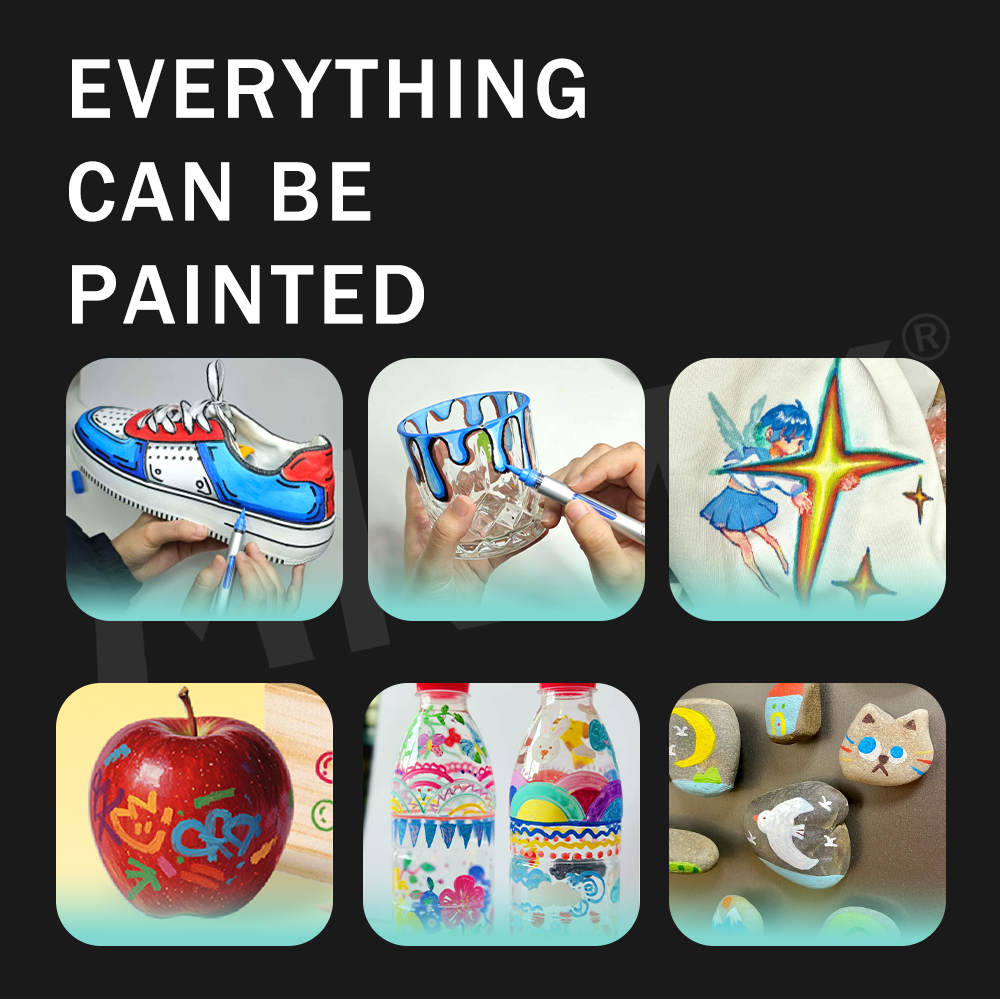
Either works if: you color on smooth marker paper with a dual-tip alcohol marker and want smooth blends. The real question is whether you want a refillable system you build color by color, or a big box you open and start using. And if you want an opaque marker that works on coloring-book paper, rocks, and fabric without bleeding through, the third option is water-based acrylic — MKMK’s soft-brush sets run from 24 to 80 colors, and the 48-color set is listed at $16.99 on the product page (check the page for current pricing and availability). Our acrylic vs alcohol comparison walks through that trade-off.
For brush pens, see our best brush pens for coloring.
Also see our Faber-Castell Pitt Artist Pens guide.
For the other big comparison, see Prismacolor vs Copic.
For the ink-base question, see water-based vs alcohol markers.
FAQ
Are Ohuhu markers refillable?
It depends on the set. The Honolulu 320-color brush-and-chisel set is listed as refillable, and Ohuhu sells refills for many of its most popular colors — but not for all colors, and not for every set. Check the listing for the exact set you are buying. Copic Sketch, Ciao, and Classic markers are refillable with Copic Various Ink across the full range.
How many colors does Copic have?
Copic Sketch has 358 colors, Ciao has 180, and Classic has 214. Ohuhu’s Honolulu range runs to 320 colors, with sets curated not to overlap.
Which blends better, Copic or Ohuhu?
Both blend well — both are alcohol-based and blend while wet. Copic’s larger Super Brush nib and longer workable time give smoother gradients; Ohuhu’s brush is a little firmer and the ink dries a little faster. Neither result is a test score — it is the consensus of published comparison guides.
Can I mix Copic and Ohuhu markers in one drawing?
Yes — both are alcohol-based, so the inks are compatible on the page. Many artists use Copic for blending and Ohuhu for broad fills. Just remember the refill difference: only the Copic markers in the drawing can be refilled for certain.