
Water-Based vs Alcohol Markers: Bleed, Blending and Best Uses
Every marker you buy is either water-based or alcohol-based, and the ink base decides almost everything about how the pen behaves: whether it bleeds through paper, how it blends, whether a light color can cover a dark one, and what surfaces it works on. “Water-based” itself splits in two — water-based dye ink and water-based acrylic paint — so this guide compares three inks, not two: alcohol ink, water-based dye ink, and water-based acrylic. The comparison uses only public specifications and the documented behavior of each ink type.
Disclosure: MKMK is the author’s brand. MKMK sells water-based acrylic markers. Competitor specifications below come from public retail listings.
At a Glance
| Alcohol markers | Water-based dye markers | Water-based acrylic markers | |
|---|---|---|---|
| Ink base | Alcohol | Water + dye | Water + acrylic paint |
| Examples | Copic, Ohuhu, Prismacolor | Tombow Dual Brush, Sakura Koi | MKMK, Posca, Liquitex |
| Bleed-through | Yes — bleeds through ordinary paper | Some — can bleed through thin paper | No — stays on the surface |
| Blending | Seamless while wet; best in class | Blends with water or a blender pen | Blends while wet; sets once dry |
| Opacity | Transparent — light cannot cover dark | Transparent | Opaque — light covers dark |
| Waterproof when dry | No | No | Yes |
| Paper needed | Smooth marker paper | Smooth, coloring-book-weight paper | Any paper weight |
| Surfaces | Paper only, in practice | Paper only | Paper, canvas, rocks, wood, glass, fabric |
| Refillable | Copic yes; most others no | No | No (Montana is the exception) |
Bleed-Through: The First Difference You Will Notice
Alcohol ink bleeds. The alcohol solvent carries the ink through the paper fibers, so on ordinary copy paper or a thin coloring-book page, the color shows on the other side — and sometimes on the desk underneath. That is why every alcohol-marker guide starts with the same advice: buy a marker paper pad, smooth bleed-proof paper made for alcohol ink, or put a plastic sheet behind your page.
Water-based dye ink bleeds less, but it still can. Tombow and Sakura Koi brush pens are water-based dye, and on thin paper they can show through — use smooth, coloring-book-weight paper and the problem mostly goes away.
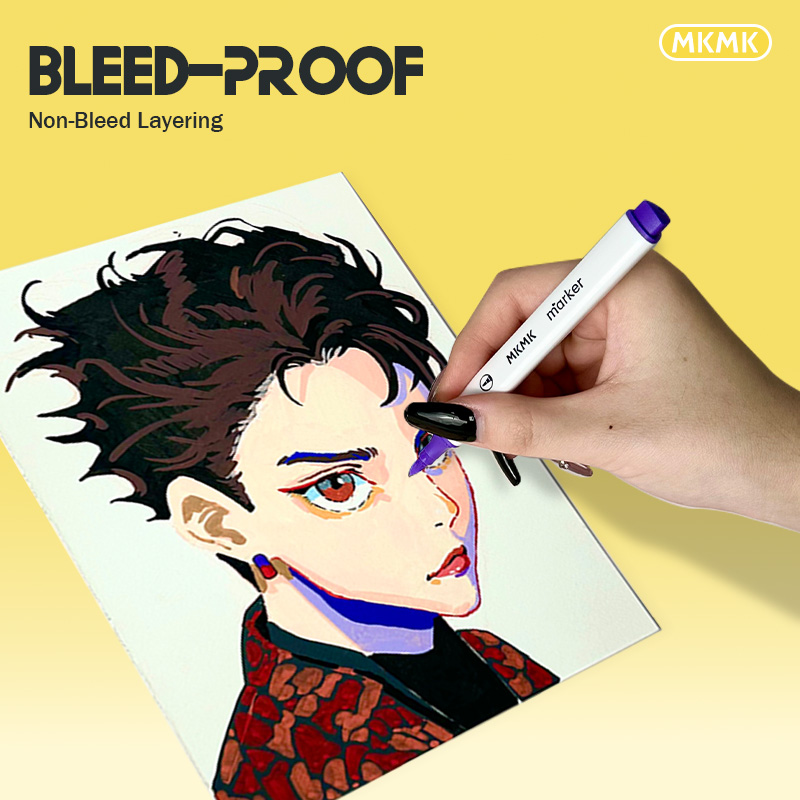
Water-based acrylic paint does not bleed through. The paint is a suspension of pigment in acrylic, not a dye dissolved in a solvent, so it sits on the surface of the paper instead of soaking in. That is why acrylic markers work on coloring-book paper of any weight, and why they are the usual recommendation for kids’ coloring books: no special paper, no plastic sheet, no ruined page underneath.
Blending: Where Alcohol Wins
Blending is the one area where alcohol markers are clearly the best tool. Alcohol ink stays workable while wet, layers without lifting the color underneath, and blends into seamless gradients — the smooth, streak-free coloring you see in illustration and coloring-book art. The colorless blender, a marker with no pigment, pushes wet ink around, softens edges, and fixes mistakes. Every alcohol-marker range sells one.
Water-based dye ink blends too, but differently: you blend it with water, or with a colorless blender pen, pulling the color with a wet brush for watercolor effects. The gradients are softer and less controlled than alcohol blends, and the ink is not waterproof once dry, so a wet hand can smudge finished work.
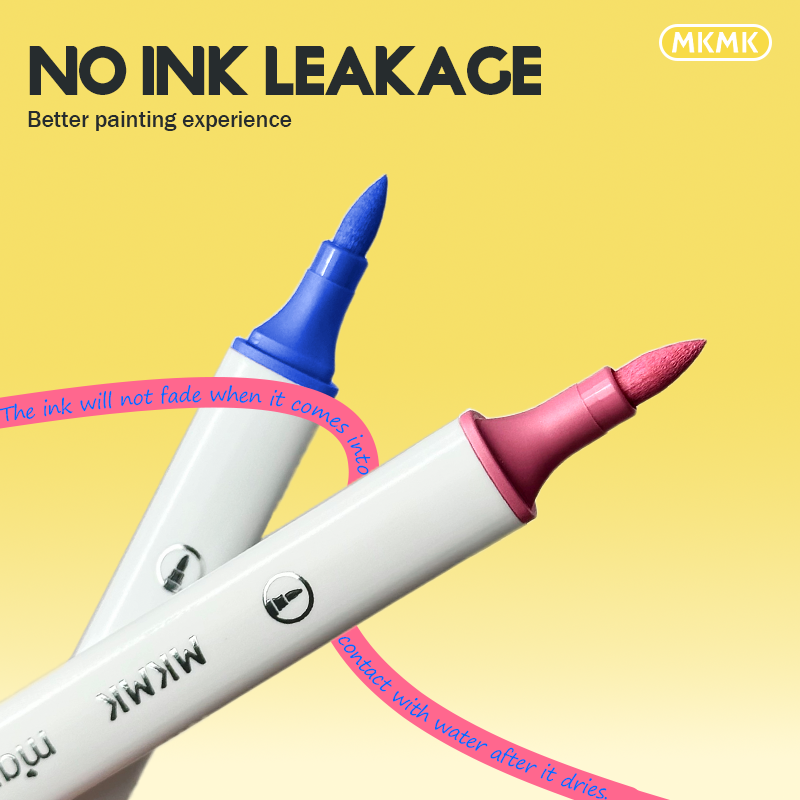
Water-based acrylic blends while wet, and then it sets. Once dry, the paint is waterproof and will not reactivate, so you cannot go back and rework a dried edge the way you can with alcohol ink. The trade is opacity: because acrylic paint is opaque, a light color covers a dark one — something neither alcohol ink nor dye ink can do. Our acrylic vs alcohol comparison walks through that trade-off in full.
Opacity and Surfaces: Where Acrylic Wins
Opacity is the sharpest line between the three inks. Alcohol ink and water-based dye ink are both transparent: they stain the paper, and a light color laid over a dark one disappears into it. If you want a white highlight on a dark background, neither ink can give it to you.
Acrylic paint is opaque. White covers black, yellow covers blue, and a light pastel covers a dark base in one or two coats. That single property is what lets acrylic markers work on dark paper, and on surfaces beyond paper: canvas, rocks, wood, glass, and fabric. Alcohol and dye markers are paper tools in practice — their ink needs absorbent paper to work, and on glass or rock it beads, smears, or wipes off.
The same opacity is why acrylic markers need no special paper. The paint stays on the surface, so paper weight does not matter, and the color you see on the page is the color in the pen, not the paper showing through it.
Paper and Care: What Each Ink Needs
Alcohol markers need smooth marker paper, bleed-proof and heavy enough to take wet ink without buckling. Store the pens horizontally, keep the caps on, and expect the ink to dry fast — that is part of why it blends so well, and part of why mistakes set quickly.
Water-based dye markers need smooth, non-textured paper — coloring-book weight is fine — and finished pages should be kept dry and out of direct sunlight, because dye colors can fade under ultraviolet exposure and are not water-resistant once dry.
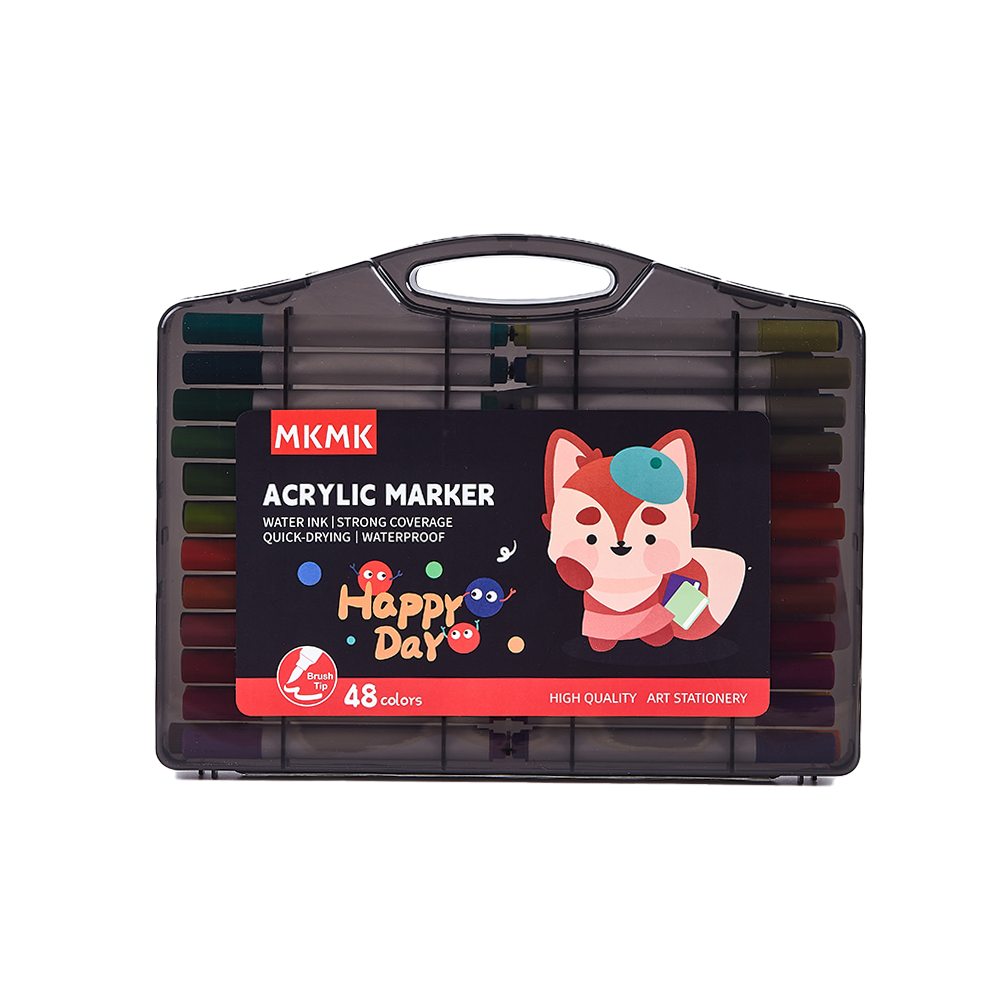
Water-based acrylic markers need no special paper and no special care beyond the basics: keep the caps on, store horizontally in a cool place, and seal pieces that will be touched, washed, or left outdoors with a clear acrylic sealer. MKMK’s soft-brush sets run from 24 to 80 colors, and the 48-color set is listed at $16.99 on the product page (check the page for current pricing and availability). Our MKMK range guide walks through every MKMK set.
Which Ink Fits You?
Pick alcohol markers if: you color on smooth paper, want seamless blends, and like illustration-style work. Start with our best alcohol markers for beginners guide — it compares Copic Ciao, Ohuhu Honolulu, Arteza, and Prismacolor on tips, color counts, and refills.
Pick water-based dye markers if: you want soft watercolor washes and gradients on paper, and you also letter and journal. Our best brush pens guide compares Tombow Dual Brush, Sakura Koi, and Kuretake Clean Color Real Brush.
Pick water-based acrylic markers if: you paint rocks, crafts, and coloring books, want one tool for many surfaces, want an opaque pen that covers dark paper, or want a marker that never bleeds through. Acrylic is the only ink in this guide that does all three.
Either works if: you are coloring on smooth paper and want a brush tip. The real question is not which ink is better, but whether you need seamless blending, watercolor washes, or opaque coverage on many surfaces. Check the product page for current pricing and stock before ordering, and check which set sizes are actually available: availability varies by size for all brands.
FAQ
Do alcohol markers bleed through paper?
Yes, on ordinary paper. Use a marker paper pad — smooth, bleed-proof paper made for alcohol ink — or put a plastic sheet behind your page. Water-based acrylic markers do not bleed through coloring-book paper.
Do water-based markers blend?
Water-based dye markers blend with water or a blender pen, giving soft watercolor effects. Water-based acrylic markers blend while wet, then set once dry and will not reactivate. Alcohol markers blend the most seamlessly of the three.
Can water-based markers be used on rocks and wood?
Water-based acrylic markers can — the opaque paint sits on the surface and works on rocks, wood, glass, canvas, and fabric. Water-based dye markers are paper tools and do not work well on hard, non-absorbent surfaces.
Are water-based markers waterproof when dry?
Water-based acrylic markers are waterproof once dry. Water-based dye markers are not water-resistant once dry, and the colors can fade under sunlight. Alcohol markers are not waterproof either.