
Acrylic Markers vs Alcohol Markers: Which One Should You Buy?
Acrylic markers and alcohol markers look similar on the shelf — both come in big color sets, both promise smooth color — but they are built on different chemistry, and that chemistry decides what they are good at. Pick the wrong type and you fight the marker on every page. Pick the right one and the work feels easy.
This comparison sticks to what can be checked from how the two types work, not to side-by-side test results. No brand here was ranked by trying them all in a lab.
Quick Comparison
| Acrylic markers | Alcohol markers | |
|---|---|---|
| Ink | Water-based acrylic paint | Alcohol-based dye ink |
| Dries | Opaque, matte, paint-like | Transparent, blends smoothly |
| Surfaces | Paper, canvas, wood, rocks, glass, fabric, ceramics | Mainly paper (marker paper or cardstock) |
| Bleed-through | Rarely bleeds through paper | Bleeds through most paper — needs marker paper or a backing sheet |
| Blending | Layer after drying; wet-blend in seconds | Blend while wet; smooth gradients are the main strength |
| Layering | Paint light over dark once dry | Dark over light only; light ink cannot cover dark |
| Smell | Little to none | Noticeable alcohol smell |
| Refillable | Generally sold as disposable sets | Many pro brands sell refills and replacement nibs |
| Typical buyer | Crafters, beginners, rock painters, gift buyers | Illustrators, designers, manga and fashion artists |
| Price model | Large complete sets at budget prices | Higher per-marker cost; sold individually or in sets |
How the Ink Works
Acrylic markers lay down water-based acrylic paint. The paint is opaque: one stroke covers what is underneath, and once it dries you can paint a light color over a dark one. That is why acrylic markers work on rocks, glass, and dark canvas — the paint sits on top of the surface instead of soaking in.
Alcohol markers lay down dye ink dissolved in alcohol. The ink is transparent and soaks into the paper, so colors blend into each other while wet. That transparency is the point: layers build depth the way watercolor does. But it also means a light color cannot cover a dark one, and the ink will show through on the other side of most paper.
Neither ink is “better.” They solve different problems.
Surfaces: Where Each One Wins
Acrylic markers win on range. They work on paper, canvas, wood, rocks, glass, ceramics, fabric, and shoes — any surface the paint can grip. Our surfaces guide walks through each one.
Alcohol markers win on paper quality. On smooth marker paper or heavy cardstock, alcohol ink blends into gradients that acrylic paint cannot match. On ordinary printer paper, though, alcohol ink bleeds through and feathers at the edges, while acrylic paint stays put.
If your work is mostly on paper and you want smooth skin tones and gradients, alcohol markers are the natural choice. If your work jumps between paper, rocks, canvas, and fabric, acrylic markers are the only one of the two that follows you everywhere.
Blending: Different Skills
Alcohol markers blend while wet. Lay down two colors side by side, then use a lighter color or a colorless blender to pull them together. The window is generous — seconds to a minute — and the result is a smooth gradient with no visible edge.
Acrylic markers blend while wet or layer after drying. The wet window is short — seconds, not minutes — so most acrylic blending is actually layering: let one color dry, then paint the next on top. It is more forgiving (a wrong stroke can be painted over) but slower for gradients. Our blending guide explains the five techniques that work.
For a portrait with smooth skin tones, alcohol markers are faster. For a mandala on a rock, acrylic markers are the only option of the two.
Bleed-Through and Paper
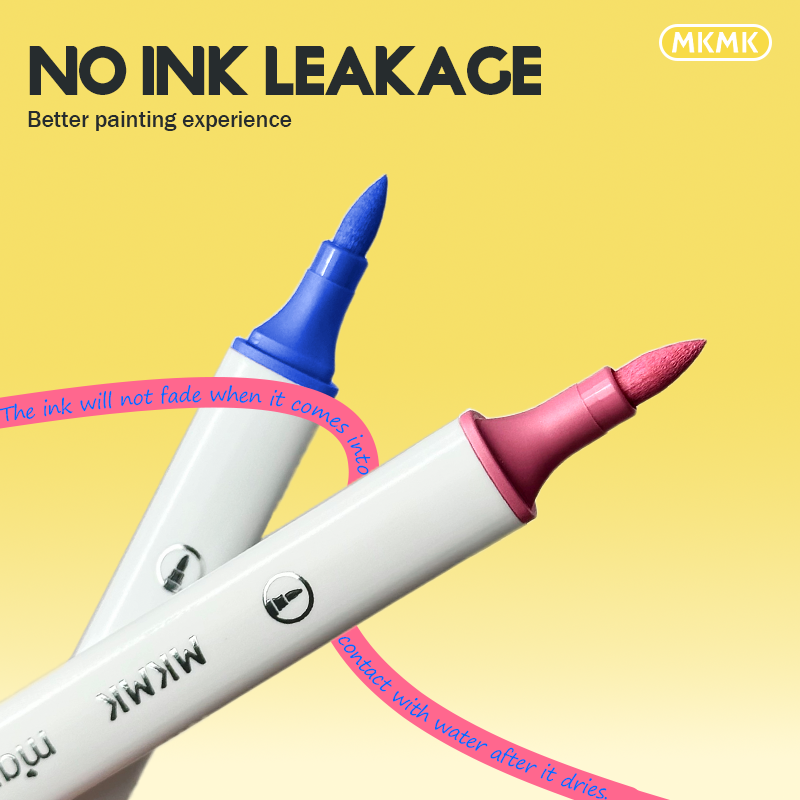
This is the practical difference most buyers feel first. Alcohol ink soaks through ordinary paper — through the page, onto the next sheet, sometimes onto the desk. Alcohol-marker artists use dedicated marker paper or put a backing sheet under every page.
Acrylic paint sits on the surface. It rarely bleeds through paper, which is why a 48-color acrylic set works fine on a sketchbook, a coloring book, or a greeting card. If you have ever ruined the back of a page with bleed-through, acrylic markers fix that problem outright.
Cost and Refills
Acrylic markers are usually sold as complete sets at budget prices — a 48-color set for the price of a few individual alcohol markers. The MKMK 48-color soft-brush set is listed at $16.99 — check the product page for current pricing and availability. Acrylic markers are generally disposable: when one runs out, you replace the set or the single color if the brand sells them individually.
Alcohol markers cost more per marker, and professional brands (Copic, Ohuhu) sell refill ink and replacement nibs, so a single marker can last for years. The upfront cost is higher; the long-term cost depends on how much you draw. Our Copic vs Ohuhu comparison breaks down the two biggest alcohol-marker brands.
Who Should Buy Which?
Choose acrylic markers if you paint on more than paper — rocks, canvas, wood, glass, fabric — or you want an opaque, forgiving medium for crafts, gifts, and classrooms. Our best acrylic markers guide helps you pick a set.
Choose alcohol markers if you draw on paper and blending is the point — illustration, manga, fashion sketching, and smooth gradients. Start with a small set in the colors you actually use, not the biggest box.
Choose both if your work spans both worlds. Many artists keep an acrylic set for opaque highlights and mixed-media work alongside alcohol markers for paper illustration. The two inks complement each other: acrylic for the opaque top layer, alcohol for the blended base.

Also see acrylic markers vs paint pens for the other common comparison.
For the ink-base question in detail, see water-based vs alcohol markers.
FAQ
Q: Can you use acrylic markers and alcohol markers together?
A: Yes, with care. Let the alcohol ink dry fully first, then add acrylic paint on top for highlights and opaque details. Do not use alcohol markers over wet acrylic paint — the alcohol can lift the paint.
Q: Do acrylic markers bleed through paper?
A: Rarely. Acrylic paint sits on the surface instead of soaking in, so it works on ordinary paper, sketchbooks, and coloring books without a backing sheet.
Q: Are alcohol markers toxic?
A: Alcohol markers contain alcohol-based solvents and have a noticeable smell. Use them in a ventilated room and follow the manufacturer’s safety guidance. Water-based acrylic markers have little smell by comparison.
Q: Which is better for beginners?
A: A complete acrylic set is usually the better first buy: lower cost, works on more surfaces, no bleed-through, and mistakes can be painted over once dry. Move to alcohol markers when smooth blending on paper becomes the priority.