Best Brush Pens for Coloring: Tombow, Sakura Koi and More
Brush pens are the most versatile tool in coloring: one pen draws a hairline, fills a petal, and letters a title, just by changing pressure. But “brush pen” covers at least three different inks — water-based dye, water-based acrylic, and real bristle brushes — and each one behaves differently on paper. This guide compares the main brush pens for coloring on public specifications only — ink type, tip, color count, and what paper they need — so you can pick the one that matches how you color.
Disclosure: MKMK is the author’s brand. Tombow, Sakura, and Kuretake specifications below come from the brands’ own product information and public retail listings.
At a Glance
| Tombow Dual Brush Pen | Sakura Koi Coloring Brush Pen | Kuretake ZIG Clean Color Real Brush | MKMK acrylic markers | |
|---|---|---|---|---|
| Ink | Water-based dye | Water-based dye | Water-based dye | Water-based acrylic, opaque |
| Tips | Flexible nylon brush + 0.8 mm fine tip | Flexible brush tip | Real bristle brush tip | Single soft brush tip |
| Color counts | 108 colors | Sold in sets and individually | Sold in sets and individually | Sets of 24 to 80 colors |
| Blendable | Yes, with water or the colorless blender | Yes, with water | Yes, with water | Yes, while wet |
| Water-resistant when dry | No | No | No | Yes, waterproof once dry |
| Works on | Smooth, non-textured paper | Paper, coloring books | Paper, watercolor paper | Paper, canvas, rocks, wood, glass, fabric |
| Best for | Coloring books, lettering, journaling | Watercolor-style coloring | Painting with a real brush feel | Crafts, rocks, opaque coverage |
Tombow Dual Brush Pen: The Benchmark
The Tombow Dual Brush Pen is the brush pen most coloring guides start with, and the specs explain why. It has two tips on one pen: a flexible nylon brush tip that works like a paintbrush — fine, medium, or bold strokes by pressure — and a firm 0.8 mm fine tip for consistent lines. The ink is water-based dye, blendable with water or the colorless blender pen, acid-free, and odorless. The brush tip is resilient nylon that keeps its point stroke after stroke, and the tips self-clean after blending.
The range is 108 colors, sold in themed 6- and 10-packs (Bright, Portrait, Pastel, Landscape, and more) and as a complete 108-color set in a case. That range is the practical advantage: you can build a collection pen by pen, or buy a themed pack for the colors you actually use. The main limits are the ink itself. Water-based dye is not water-resistant when dry, so a wet hand or a spill can smudge finished work, and Tombow warns that dye colors can fade under sunlight or ultraviolet exposure. Use smooth, non-textured paper for the best results, and keep finished pages out of direct sun.
Sakura Koi Coloring Brush Pen: The Watercolor Feel
The Sakura Koi Coloring Brush Pen is the watercolor-flavored alternative. It is a water-based dye brush pen with a flexible brush tip, made for coloring books and watercolor-style work: lay down color, then pull it with a wet brush or a water brush for soft washes and gradients. It is sold in sets and individually, and it suits the same paper as Tombow — smooth, non-textured, coloring-book weight.
The difference from Tombow is the tip. The Koi’s brush tip is softer and more paintbrush-like than Tombow’s resilient nylon brush, which makes it better for washes and worse for crisp lettering. If your coloring is mostly soft gradients and watercolor effects, the Koi is the nicer tool. If you also letter and journal, Tombow’s fine tip earns its place.
Kuretake ZIG Clean Color Real Brush: A Real Bristle Tip
The Kuretake ZIG Clean Color Real Brush is the odd one out, and the name says why: it has a real bristle brush tip, not a nylon fiber tip. That makes it the closest thing to painting with a brush in a pen body. The ink is water-based dye, blendable with water, and the pen is made for illustration, lettering, and watercolor-style coloring on paper.
A real bristle tip paints like a brush — soft, expressive, and hard to control for fine detail. It is the best choice of the three for painterly coloring and the worst for precise line work. It is also the one most likely to fray if you press hard, so it rewards a light hand.
MKMK Acrylic Markers: The Opaque Option
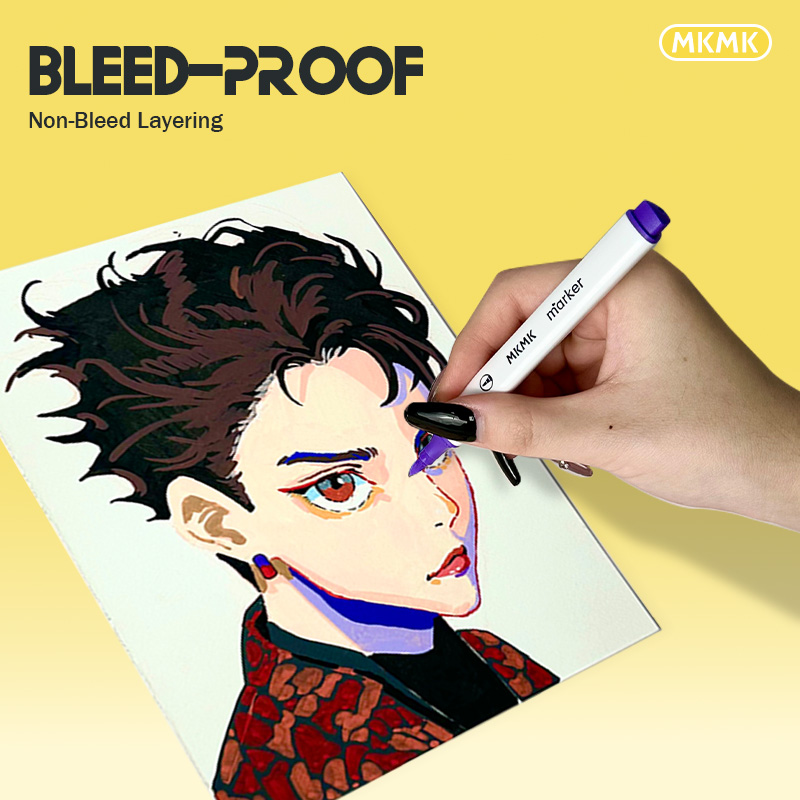
MKMK’s acrylic markers are the fourth option, and they solve a different problem. The ink is water-based acrylic, not dye: it is opaque, so a light color covers a dark one, and it is waterproof once dry. That makes it the only brush pen in this guide that works on rocks, wood, glass, and fabric as well as paper — and the only one that does not need special paper, because acrylic paint stays on the surface instead of soaking in.
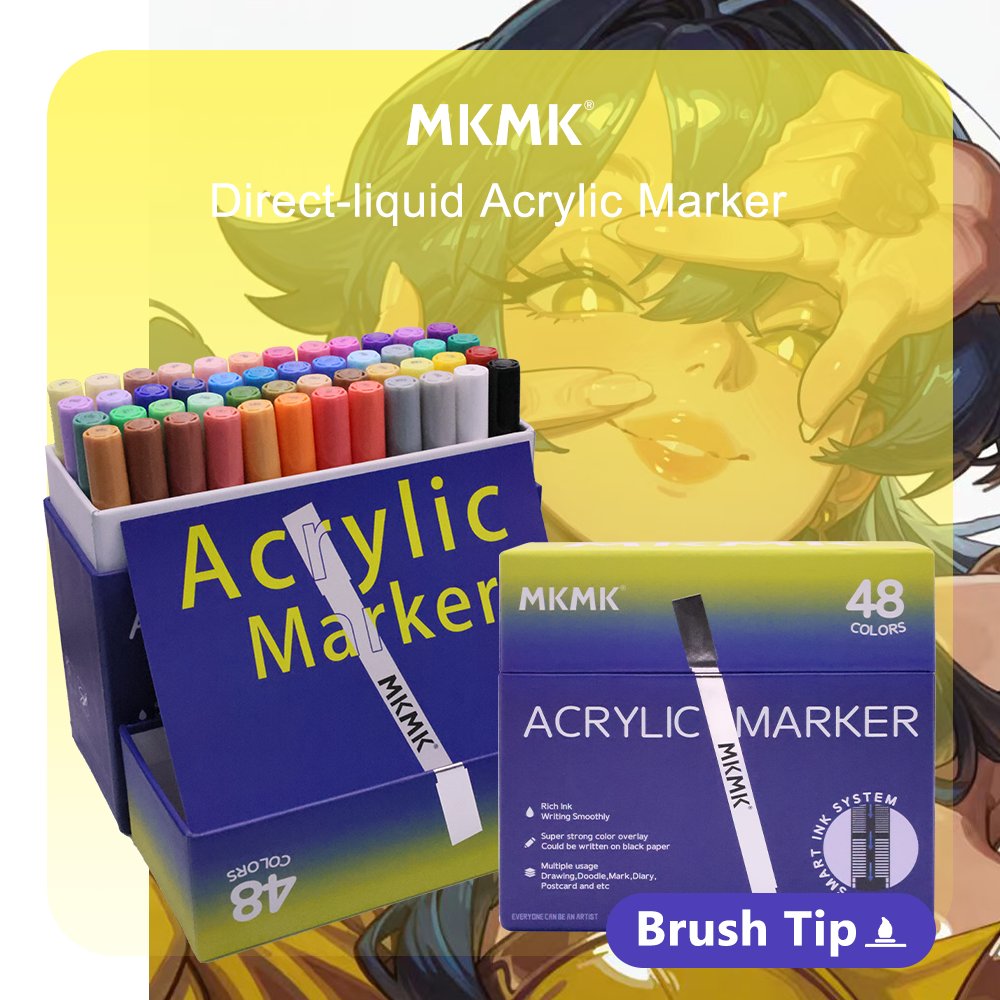
MKMK’s sets run from 24 to 80 colors, with a single soft brush tip per pen. The 48-color soft-brush set is the most popular starting point, listed at $16.99 on the product page (check the page for current pricing and availability). The trade-off is that acrylic ink does not blend with water the way dye ink does — it blends while wet, and once dry it is set. Our acrylic vs alcohol comparison and our water-based vs alcohol guide cover the ink trade-offs in full.
For coloring books specifically, the choice is between dye and acrylic. Dye brush pens (Tombow, Koi, Kuretake) give softer blends and watercolor effects on smooth paper. Acrylic markers give opaque coverage, work on any paper weight, and never bleed through. Our coloring books guide covers how to choose by project.
Which Brush Pen Fits You?
Pick Tombow Dual Brush Pen if: you want the widest brush-pen range (108 colors), a brush tip plus a fine tip in one pen, and a tool that covers coloring, lettering, and journaling. Keep finished pages out of direct sunlight.
Pick Sakura Koi if: you want soft watercolor washes and gradients, and you color on smooth paper with a wet brush nearby.
Pick Kuretake Clean Color Real Brush if: you want a real bristle tip and a painterly feel, and you are comfortable with a light hand and less precision.
Pick MKMK acrylic markers if: you want opaque color that covers dark paper, works on rocks, wood, glass, and fabric, and never bleeds through — or you want US warehouse stock with fast shipping. Our MKMK range guide walks through every MKMK set.
Either works if: you are coloring on smooth paper with a brush tip. The real question is whether you want dye ink that blends with water, or acrylic ink that stays put and covers. Check the product page for current pricing and stock before ordering, and check which set sizes are actually available: availability varies by size for all brands.
For the head-to-head, see Copic vs Ohuhu alcohol markers.
FAQ
What is the best brush pen for coloring books?
For most coloring books, the Tombow Dual Brush Pen is the standard pick: a flexible brush tip plus a fine tip, 108 colors, and water-based ink that blends. If you want opaque color that never bleeds through, MKMK acrylic markers are the alternative — see our coloring books guide.
Do brush pens bleed through paper?
Water-based dye brush pens can bleed through thin paper — use smooth, coloring-book-weight paper. Acrylic markers stay on the surface and do not bleed through. Alcohol markers bleed the most and need marker paper.
Can you blend Tombow Dual Brush Pens with water?
Yes — the ink is water-based dye, so you can blend two colors together, use the colorless blender pen, or pull the color with water and a brush for watercolor effects.
Are Tombow brush pens waterproof when dry?
No. Water-based dye ink is not water-resistant once dry, and the colors can fade under sunlight. Keep finished pages dry and out of direct sun. Acrylic markers are waterproof once dry.