
Faber-Castell Pitt Artist Pens: A Practical Guide
The Faber-Castell Pitt Artist Pen is the pen behind a lot of the black-and-white line work you see in illustration, comics, and sketchbooks — and the color version is a quiet favorite for coloring and journaling too. The ink is pigmented India ink: waterproof once dry, highly lightfast, odorless, acid-free, and pH neutral. It does not bleed through paper, and because the ink is waterproof when dry, you can paint over it with watercolor without the lines lifting. This guide covers the range as Faber-Castell publishes it — ink, nib sizes, color counts, and what each pen is actually for.
Disclosure: MKMK is the author’s brand. Faber-Castell specifications below come from the brand’s own product information and public retail listings.
At a Glance
| Pitt Artist Pen Brush | Pitt Artist Pen Fineliner | Pitt Artist Pen Calligraphy | Pitt Artist Pen Bullet | |
|---|---|---|---|---|
| Ink | Pigmented India ink | Pigmented India ink | Pigmented India ink | Pigmented India ink |
| Tips | Flexible brush nib | XXS 0.05, XS 0.1, S 0.3, F 0.5, M 0.7 mm | C 2.5 mm chisel | 1.5 mm bullet, 2.5 mm bullet |
| Color counts | 60 colors | Black in all sizes; S, F, M in 3 colors each | 12 colors | 1.5 mm in 2 colors; metallic 1.5 mm in 6 colors |
| Waterproof when dry | Yes | Yes | Yes | Yes |
| Lightfast | Yes — high lightfastness | Yes | Yes | Yes |
| Bleed-through | No — does not bleed through paper | No | No | No |
| Best for | Coloring, sketching, illustration | Hatching, fine detail, technical lines | Lettering, calligraphy | Bold lines, metallic accents |
The Ink: Why India Ink Matters
India ink is the oldest drawing medium in this guide, and its properties are the reason the Pitt range exists. The ink is pigmented rather than dye-based, so the color sits on the paper as tiny solid particles instead of soaking in as a stain. That is what makes it waterproof once dry: a wet brush or a watercolor wash laid over a Pitt line does not lift it, smudge it, or bleed it. The same pigmented ink is highly lightfast, so drawings keep their color for decades, and it is acid-free and pH neutral, which matters for work you want to keep.
The practical consequence is layering. You can sketch in Pitt fineliner, color over it with the Pitt Brush, and then wash watercolor on top, and each layer stays where you put it. That is the workflow the range was built for: fineliner for the drawing, brush for the color, watercolor for the wash. No other pen in this guide layers the same way, because dye inks reactivate when wet and alcohol inks bleed through thin paper.
The Nibs: 11 Sizes, One System
The Pitt range is really a nib system, and the brush pen is only one part of it. Faber-Castell lists 11 nib sizes across the family, and black is available in all of them. The brush nib is the coloring tool: a flexible brush tip that draws a hairline upright and a broad stroke on its side, available in 60 colors. The Big Brush is a larger brush nib available in black and white for broad fills. The Fude nibs — medium and hard, in black — are a Japanese-style brush tip for calligraphy and expressive strokes.
The fineliners are the detail tools: fixed line widths from 0.05 mm (XXS) to 0.7 mm (M), with the S, F, and M sizes also available in three colors each. They are the pens for hatching, cross-hatching, and technical lines that stay exactly the width you drew. The calligraphy nib is a 2.5 mm chisel tip in 12 colors, made for lettering. The bullet nibs — 1.5 mm in two colors, 2.5 mm in white, and a metallic 1.5 mm in six colors — cover bold lines and metallic accents.
The range is sold as individual pens and in sets: brush sets of 12, 24, 48, and 60 colors, and a 90-color wood case that combines 60 brush pens with 30 metallic bullet and superfine pens. Faber-Castell recommends storing the pens horizontally.
What Pitt Pens Are Best For
Sketching and illustration. The fineliner-plus-brush combination is the classic Pitt workflow: sketch and hatch in fineliner, color with the brush. The waterproof ink means the line work survives any wash you put over it.
Coloring books and journals. The brush pen colors smoothly on paper, the ink does not bleed through, and the 60-color range covers the usual palette. The 12-color Basic Tones set is the common entry point; the 48- and 60-color sets are for people who color often.
Comics and manga inking. The fineliners and the Fude nibs are made for inking: crisp black lines, variable width from the brush, and ink that stays black under any later coloring.
Lettering and calligraphy. The calligraphy nib and the brush pen both letter well, and the waterproof ink means lettering survives a watercolor background.
Line and wash. This is the Pitt pen’s home ground. Draw in Pitt, wash in watercolor, and the drawing stays exactly as drawn.
Pitt vs Acrylic Markers: A Different Kind of Pen
Pitt pens and acrylic markers look similar on a shelf — both are pens that lay down color — but they are different tools. Pitt ink is a transparent-to-semi-transparent dye-free pigment ink: it layers like watercolor, it shows the paper through it, and it works on paper only. It does not cover a dark line underneath it, and it does not work on rocks, wood, glass, or fabric.
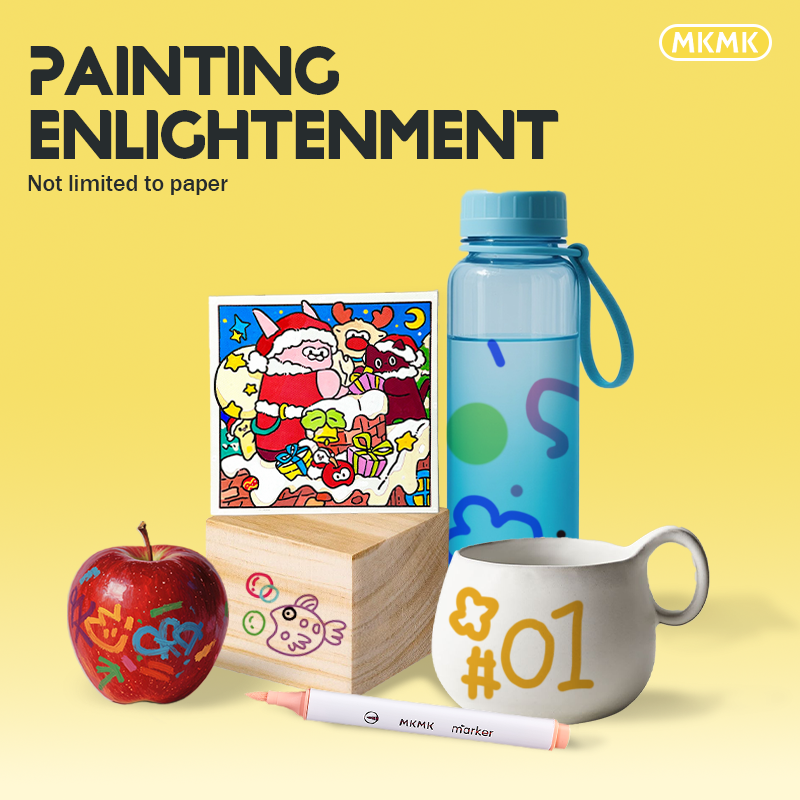
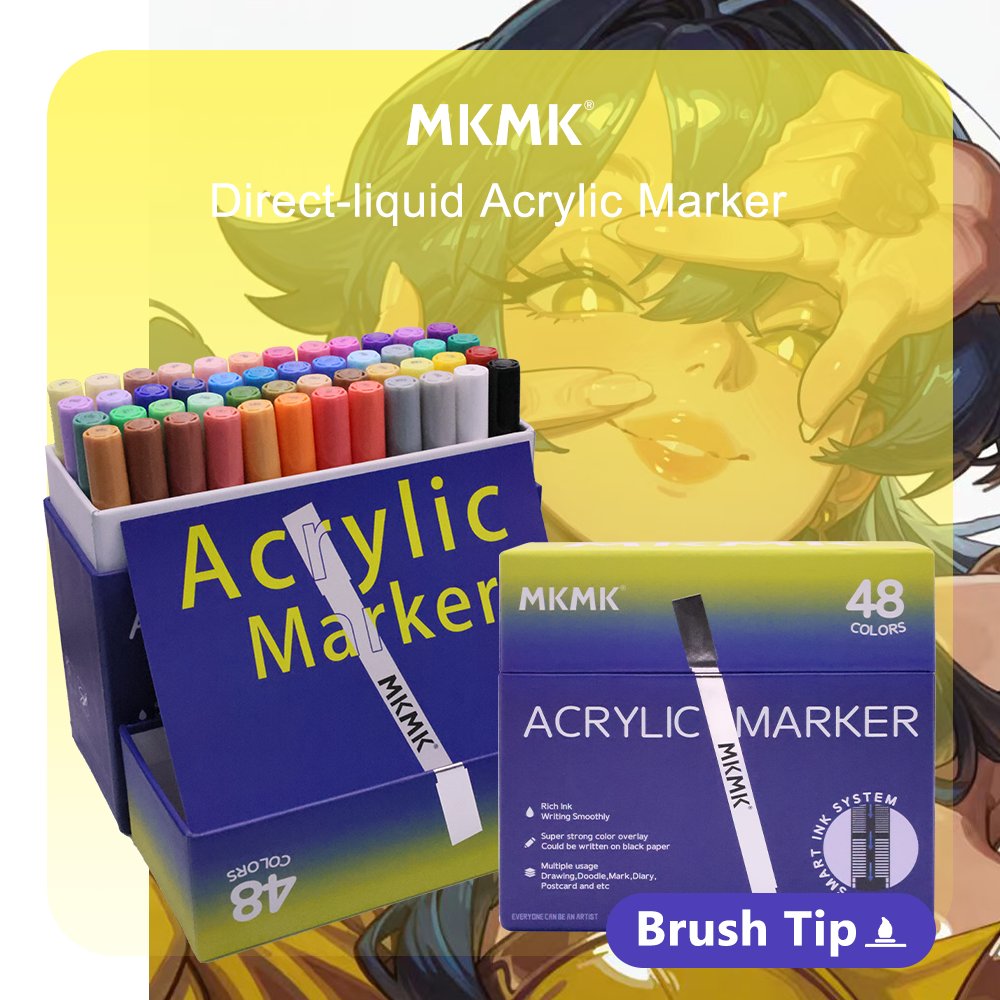
Acrylic markers are opaque. A light color covers a dark one, the paint sits on the surface instead of soaking in, and it works on paper, canvas, rocks, wood, glass, and fabric. MKMK’s soft-brush sets run from 24 to 80 colors, and the 48-color set is listed at $16.99 on the product page (check the page for current pricing and availability).
Pick Pitt if you draw on paper and want permanent, waterproof lines you can wash over — sketching, illustration, comics, journaling. Pick acrylic markers if you want opaque color that covers, works on many surfaces, and never bleeds through. Our best brush pens guide compares the other brush pens for coloring, and our MKMK range guide walks through every MKMK set.
For the head-to-head, see Copic vs Ohuhu alcohol markers.
For the wider comparison, see acrylic markers vs alcohol markers.
FAQ
Are Faber-Castell Pitt Artist Pens waterproof?
Yes — the pigmented India ink is waterproof once dry, on absorbent surfaces such as paper. You can paint watercolor over a Pitt drawing without the lines lifting or smudging.
How many colors do Pitt Artist Pens come in?
The brush nib is available in 60 colors, plus six metallics. The fineliners are black in all sizes, with the S, F, and M sizes also in three colors each. The calligraphy nib comes in 12 colors.
Do Pitt pens bleed through paper?
No — Faber-Castell states the ink does not bleed through paper. That makes the brush pen a good choice for coloring books and journals.
Can you use Pitt pens with watercolor?
Yes — that is their main use case. Draw in Pitt, let the ink dry, then wash watercolor over it. The waterproof ink stays put, so the line work survives the wash.