
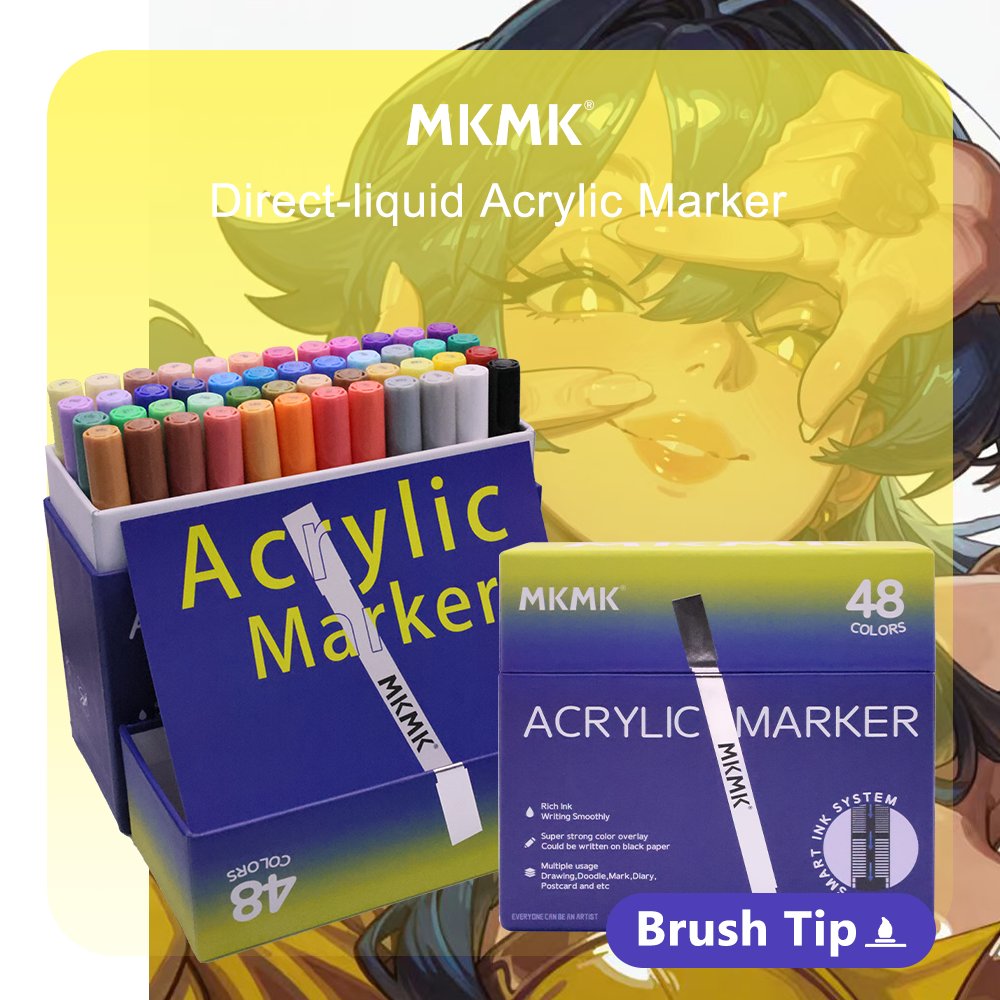
Direct Liquid Acrylic Markers: What They Are and When to Choose Them
Direct liquid acrylic markers store acrylic paint as liquid ink, not ink soaked into a fiber nib. The ink feeds the tip as you draw, so color comes out bold and even right away — no pressing hard, no going over the same spot twice. They are the simplest way to get flat color on paper, rocks, wood, and more.
Direct liquid markers are one of the four lines in the MKMK acrylic markers range, alongside soft-brush markers, dual-tip watercolor outlining pens, and oil-based colored pencils. This guide covers how they work, what they are good at, how to pick a set size, and how to look after them.
What Is a Direct Liquid Acrylic Marker?
A direct liquid marker keeps its paint as free-flowing liquid inside the barrel, and the liquid feeds straight to the tip as you draw. That is the whole idea behind the name: the ink goes directly from the reservoir to the tip, instead of sitting in a nib that has to be pressed and pumped to release color.
The result is a steady, even flow. Each stroke lays down the same bold, opaque color, and you do not need to press hard or retrace a line to fill it in. The paint is acrylic, so it dries to a flat, matte finish, and once a layer is dry you can paint another color over it.
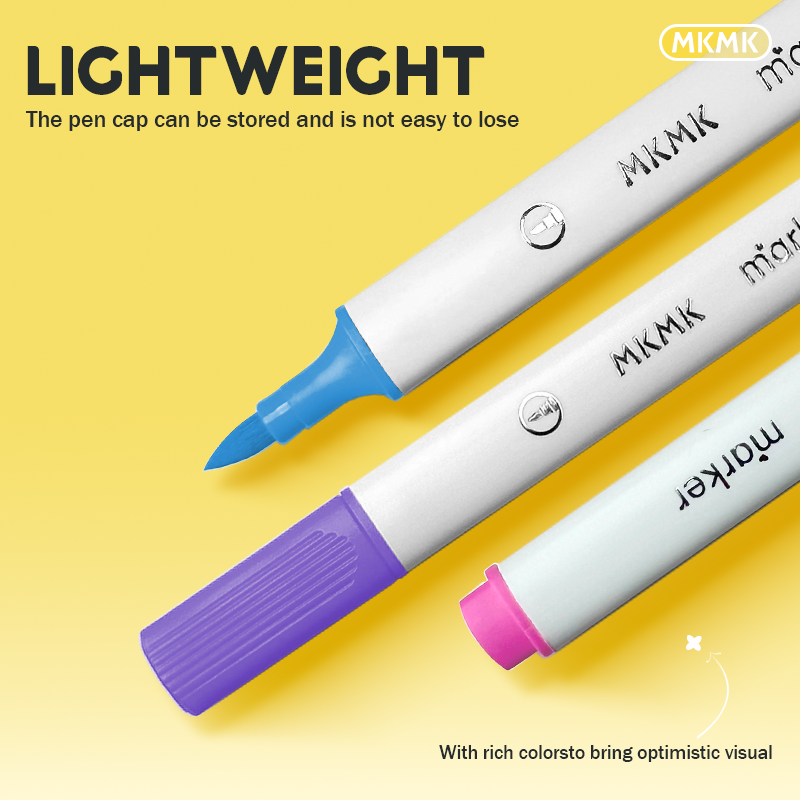
MKMK direct liquid markers have a silver barrel with a colored cap that matches the ink inside, and a brush-style tip. The cap makes it easy to pick the right color at a glance, and the tip gives you enough control for outlines as well as fills.
Direct Liquid vs Soft Brush: The Quick Comparison
MKMK sells two kinds of acrylic markers, and they suit different kinds of work. Here is the short version:
| Direct liquid | Soft brush | |
|---|---|---|
| Tip | Smooth-flowing liquid ink tip | Flexible brush tip |
| Best for | Bold flat color, coloring, signs, crafts | Lettering, blending, painterly strokes |
| Line control | Steady and even; easy from the start | Varies with pressure; takes practice |
| Blending | Harder; better for layering dry color | Excellent while paint is wet |
| Set sizes | 24–80 colors | 12–80 colors |
If you mostly want clean, even color fast, start with direct liquid. If you mostly want lettering and gradients, start with soft brush. For the full head-to-head, see our soft brush vs direct liquid acrylic markers comparison.
What Can You Paint With Direct Liquid Markers?

Paper and coloring books. This is where direct liquid markers feel most at home. The even flow fills large areas without streaks, and the opaque paint covers printed lines cleanly. Use mixed-media paper or cardstock (around 200 gsm or heavier) for finished pieces. On thin paper the paint can bleed through, like any paint-based marker, so put a scrap sheet underneath your work.
Canvas. Direct liquid markers work well on canvas for bold shapes, outlines, and flat color blocks. The opaque paint sits on the surface and covers evenly, which makes them handy for posters and signs as well as canvas art.
Rocks and wood. The opaque paint covers both surfaces well, and the steady flow makes it easy to fill in designs without patchy spots. Clean and dry the surface first so the paint sticks properly. If the finished piece will be handled a lot or kept outdoors, finish it with a clear sealant.
Fabric. Direct liquid markers mark fabric well for tote bags, patches, and craft projects. Test on a hidden spot first. Acrylic paint on fabric is not guaranteed wash-proof, so expect the color to soften with washing.
Ceramic and glass. They work on smooth glazed surfaces such as mugs, jars, and tiles. Keep in mind that marker paint on a mug is decoration, not a factory glaze: hand-wash only, and do not count on it surviving the dishwasher.
Signs and posters. Bold, flat color is exactly what signs and posters need, and direct liquid markers deliver it with less effort than a brush. They are a practical choice for handmade signs, labels, and classroom displays.
Which Set Size Should You Choose?
MKMK direct liquid markers come in four set sizes. The paint and the tip are the same in every set — the only difference is how many colors you get.
| Set size | Price | Good for |
|---|---|---|
| 24 colors | $16.99 | Trying the format, or a small project with basic colors |
| 48 colors | $31.99 | Most people — a full working palette with light and dark shades |
| 60 colors | $37.99 | More shades for detailed work and smoother color steps |
| 80 colors | $47.99 | The full range, for artists who want every shade on hand |
The 48-color set is the best starting point for most people: enough colors to shade and mix, without paying for shades you may never reach for. A 24-color set is fine if you are testing the format, and the larger sets suit artists who paint often and want a wider range ready to go.
See current prices and availability on the direct liquid acrylic markers product page. If you need sets in bulk — for a classroom, a shop, or an event — see our acrylic markers wholesale guide.
How to Care for Direct Liquid Markers
Direct liquid markers need little maintenance, but two habits keep them working well.
First, keep the caps on when you are not using them. Like any acrylic marker, they dry out if the caps are left off. Second, store them horizontally in a cool place, out of direct sun and away from heat. Do not leave them in a hot car or on a sunny windowsill.
If you have not used a set for a while, test each pen on scrap paper before starting a finished piece. A pen that has been sitting unused may need a few strokes before the flow is even again. When a pen finally runs out of ink, replace it — the color stays consistent right up to the end because the ink is fed as liquid, not drawn from a drying nib.
Start with the 48-color set if you are not sure. It covers most projects, and you can add the larger set later if you find yourself reaching for shades you do not have.
Frequently Asked Questions
Are direct liquid acrylic markers good for beginners?
Yes. The steady ink flow does most of the work: you get even color without learning pressure control or blending technique first. Start with the 24-color set to test the format, or go straight to the 48-color set for a full palette.
Can you use direct liquid markers on fabric?
Yes, they mark fabric well for tote bags, patches, and craft projects. Test on a hidden spot first. Acrylic paint on fabric is not guaranteed wash-proof, so expect the color to soften with washing.
Do direct liquid markers work on dark paper?
Yes. The paint is opaque, so colors show up on dark paper and dark surfaces — including white and light colors. Test a small area first if the surface is unusual, such as coated or glossy stock.
Can you layer one color over another once it is dry?
Yes. Let the first layer dry, then paint over it — the opaque paint covers the layer below. The working rule is simple: blend while wet, layer when dry.