
Best Alcohol Markers for Beginners (and When to Pick Acrylic Instead)
Alcohol markers are the tool behind the smooth, streak-free coloring you see in illustration and coloring-book art. The ink is alcohol-based, so it blends while wet, layers without lifting the color underneath, and dries fast on smooth paper. But the first set is where beginners go wrong: buy too small and you cannot blend, buy too big and you have spent a lot on a hobby you are still testing. This guide compares the main beginner options on public specifications only — tip types, color counts, and whether the markers are refillable — and ends with the case for picking acrylic markers instead.
Disclosure: MKMK is the author’s brand. MKMK does not sell alcohol markers. Competitor specifications below come from public retail listings.
At a Glance
| Copic Ciao | Copic Sketch | Ohuhu Honolulu | Arteza | Prismacolor Premier | |
|---|---|---|---|---|---|
| Ink | Alcohol-based | Alcohol-based | Alcohol-based | Alcohol-based | Alcohol-based |
| Tips | Super Brush + Medium Broad | Super Brush + Medium Broad | Brush + fine or brush + chisel (varies by set) | Dual tip (brush + chisel) | Fine + chisel, or fine + brush |
| Color counts | 180 colors | 358 colors | Sets up to 320 colors | Sets up to 120+ colors | Up to about 200 colors |
| Refillable | Yes, with Copic Various Ink | Yes, with Copic Various Ink | Varies by set — check the listing | No | No |
| Replaceable nibs | Yes | Yes | No | No | No |
| Sold as | Individually and in sets | Individually and in sets | Sets | Sets | Individually and in sets |
| Best for | A first refillable system | A collection to grow for years | A wide palette at a mid-range price | A first budget set | A known brand at a lower price |
Start Here: What a Beginner Actually Needs
A good first set has three things: a dual tip (brush for fills, fine or chisel for detail), 24 to 48 colors (enough to blend skin tones, skies, and greens), and smooth paper to practice on. Alcohol ink bleeds through ordinary copy paper, so buy a marker paper pad — smooth, bleed-proof paper made for alcohol ink — or your first drawings will soak through to the desk.
The other thing a beginner needs is a colorless blender. Every alcohol marker range sells one: a marker with no pigment that pushes wet ink around, softens edges, and fixes mistakes. Copic’s is the 0 colorless blender, and most Ohuhu sets include one. Learn the blender early — it is the tool that makes alcohol markers feel forgiving.
The Budget First Set: Ohuhu, Arteza, Shuttle Art
If you are not sure alcohol markers are for you, start cheap. A 24- or 48-color dual-tip set from Ohuhu, Arteza, or Shuttle Art costs far less than a Copic set and covers the same basic skills: blending, layering, and shading. Ohuhu’s Honolulu line is the most recommended of the three in beginner guides: brush and fine or brush and chisel dual tips, vibrant colors, and sets that are curated so they do not overlap — start with a 48-color set, then add a 48 pastel set or a 104-color set without buying the same colors twice. Some Ohuhu Honolulu sets are sold as refillable; others are not, so check the listing for the exact set you are buying.
The trade-off with budget sets is that most are not refillable and the nibs cannot be replaced. When your favorite color runs dry, you buy a replacement marker — or a whole new set. That is fine for a first set you are testing, and it is the reason to start small: a 24- or 48-color set, not a 320-color one. Shuttle Art sells sets up to 240 colors with a colorless blender included, and Arteza groups its colors by family, which helps a beginner learn color relationships.
The Grow-With-You Set: Copic Ciao
If you already know you will stick with marker art, Copic Ciao is the beginner-friendly way into a system you can grow for years. Ciao shares the ink and nib system of the higher Copic lines, so what you learn on Ciao transfers directly to Sketch. The markers are refillable with Copic Various Ink, the nibs are replaceable, and colors are sold individually — so when one color runs out, you refill it instead of buying a new set.
Ciao has 180 colors, against Sketch’s 358. That is still a large range, and it is the reason Ciao is the recommended starting point rather than Sketch: you get the refillable system and the Super Brush nib at a lower entry point, and you can add Sketch colors later without duplicating what you own. Copic sets are often sold in curated groups — the Ciao 72 set, for example, combines two 36-color groups — so check which colors a set contains before buying a second one.
The honest cost of Copic is not the markers alone. Refills are an extra purchase, and the colorless blender is effectively mandatory for clean gradients.
Prismacolor Premier: The Middle Ground
Prismacolor Premier sits between the budget sets and Copic. It is a known art-supply brand, widely sold, and its alcohol markers come in fine-and-chisel or fine-and-brush dual-tip versions, in up to about 200 colors. The ink is rich and opaque, and single colors are easy to replace because the brand is stocked in most art shops.
The catch is the same as the budget sets: Prismacolor markers are not refillable, and the nibs cannot be replaced. When the ink runs out, you buy a new marker. For a beginner who wants real quality without committing to the Copic system, that is a fair trade — but it is worth knowing before you build a large collection around a non-refillable pen.
When to Pick Acrylic Markers Instead
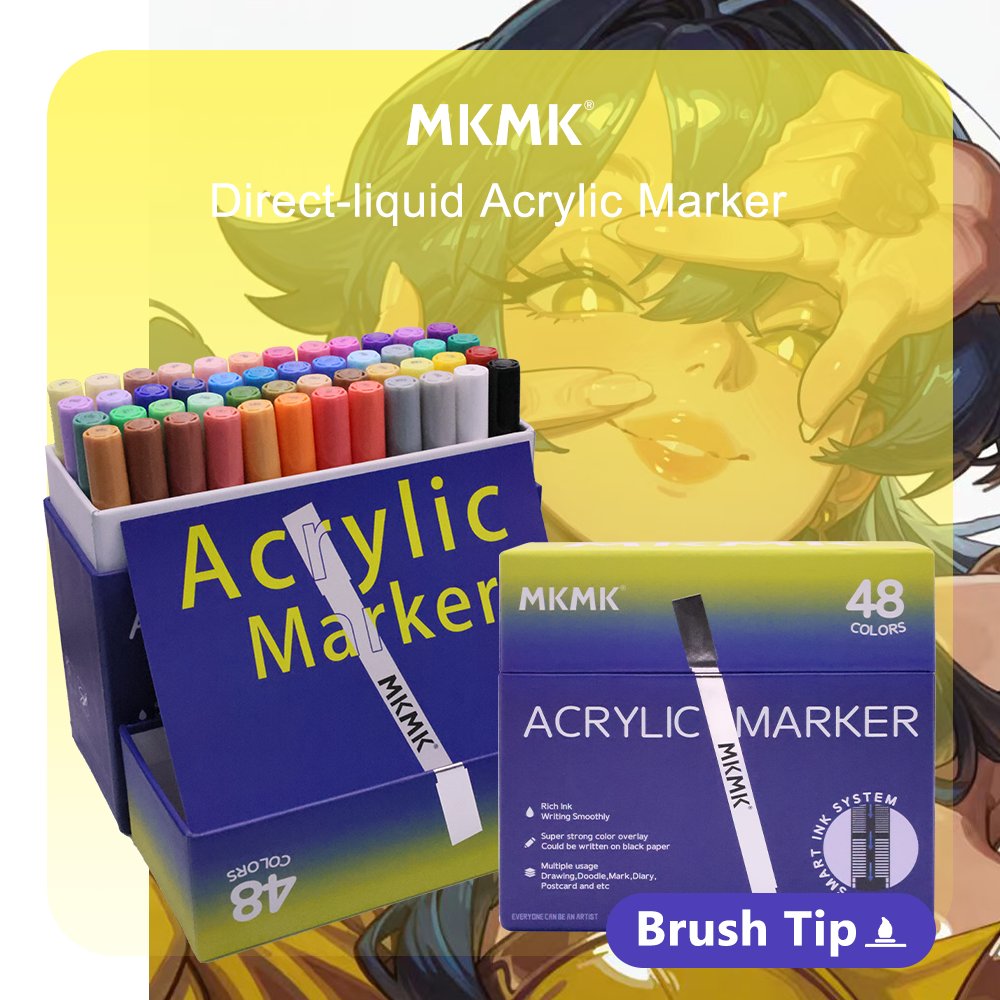
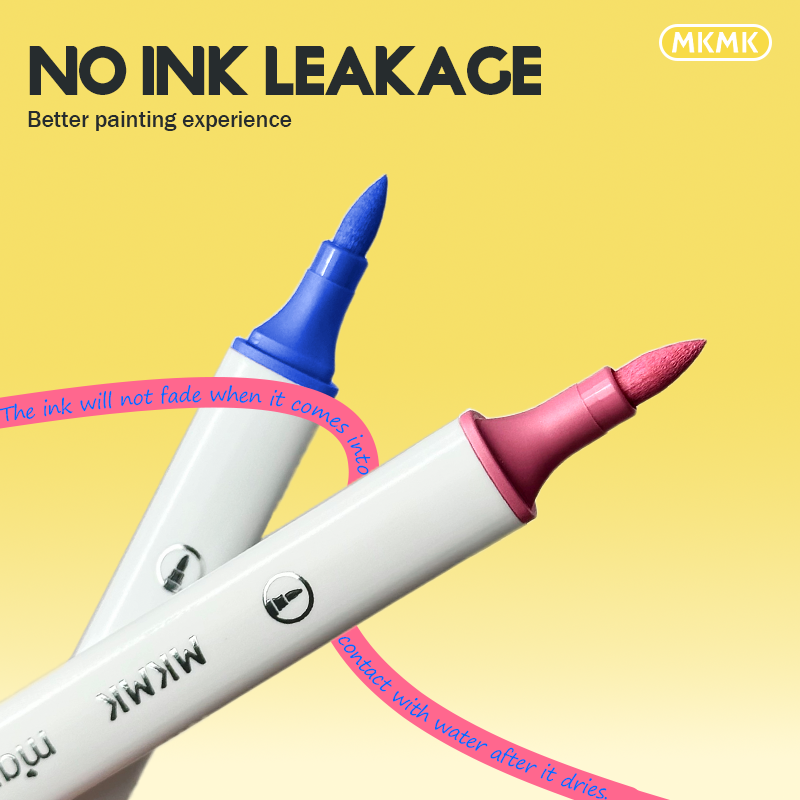
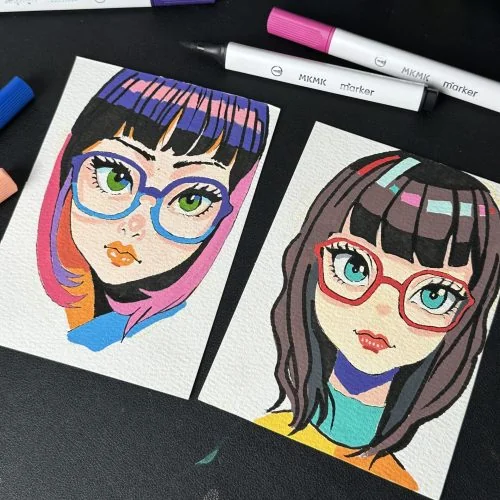
MKMK does not sell alcohol markers, and there is a reason this guide ends here: for a lot of beginners, acrylic markers are the better first buy. Alcohol ink bleeds through thin paper, needs special marker paper, and only works well on smooth, non-absorbent surfaces. Water-based acrylic markers stay on the surface — they work on coloring-book paper, canvas, rocks, wood, glass, and fabric, with no bleed-through and no special paper.
Acrylic markers also blend while wet, and they are opaque, so a light color covers a dark one — something alcohol ink cannot do. MKMK’s soft-brush sets run from 24 to 80 colors, and the 48-color set is listed at $16.99 on the product page (check the page for current pricing and availability). Our acrylic vs alcohol comparison walks through the full trade-off, and our water-based vs alcohol guide covers bleed, blending, and best uses.
Pick alcohol markers if you color on smooth paper, want seamless blends, and like illustration-style work. Pick acrylic markers if you paint rocks, crafts, and coloring books, want one tool for many surfaces, or want an opaque pen that covers dark paper.
For the head-to-head, see Copic vs Ohuhu alcohol markers.
FAQ
How many alcohol markers should a beginner buy?
Start with 24 to 48 colors. That is enough to blend skin tones, skies, and greens. A bigger set is only worth it once you know you will keep coloring — and with Ohuhu, later sets are curated not to overlap the first one.
Are Copic markers worth it for beginners?
Copic Ciao is worth it if you plan to color for years: refillable ink, replaceable nibs, and colors sold individually mean the set grows with you. If you are still testing the hobby, a budget set from Ohuhu or Arteza is the cheaper way to find out.
Do alcohol markers bleed through paper?
Yes, on ordinary paper. Use a marker paper pad — smooth, bleed-proof paper made for alcohol ink — or put a plastic sheet behind your page. Water-based acrylic markers do not bleed through coloring-book paper.
Can I use acrylic markers instead of alcohol markers?
For most craft and coloring-book work, yes. Acrylic markers are opaque, work on many surfaces, and do not need special paper. They do not blend as seamlessly as alcohol ink on smooth paper, so for illustration-style blending, alcohol markers are still the better tool. See our acrylic vs alcohol comparison for the full breakdown.