
Oil-Based Colored Pencils vs Acrylic Markers: Which One Should You Buy?
Oil-based colored pencils and acrylic markers both put color on paper, but they work in opposite ways: pencils build color slowly in thin, blendable layers, while markers lay down bold, opaque color in a single stroke. Neither is better in general — the right choice depends on whether you want soft gradients and fine detail, or fast coverage and strong color. This guide compares them on blending, layering, detail, paper, and best uses, so you can pick the tool that fits your project.
MKMK makes both: oil-based colored pencils in 72 and 120 color sets, and acrylic markers in soft-brush and direct-liquid lines. Many artists keep both on the desk and use them together — pencils for shading and detail, markers for base color and bold shapes.
What Oil-Based Colored Pencils Are
Colored pencils get their name from the binder that holds the pigment together. In oil-based pencils, that binder is oil rather than wax. The practical difference:
- Oil-based cores are firmer and less crumbly than wax-based ones, so the point holds a sharp edge longer and the pencil does not leave waxy crumbs on the page.
- Layers stay workable. Oil-based pigment layers cleanly: you can lay one color over another and still blend them, without the waxy buildup that makes wax-based pencils go cloudy after three or four layers.
- Less wax bloom. Wax-based pencils can develop a cloudy white film (wax bloom) as the wax rises to the surface over time. Oil-based pencils are much less prone to this.
Oil-based pencils are a slow medium. You build color gradually, layer by layer, and the result is soft gradients, subtle skin tones, and fine detail that no marker can match. The trade-off is time: covering a large area with pencils takes patience.
What Acrylic Markers Are
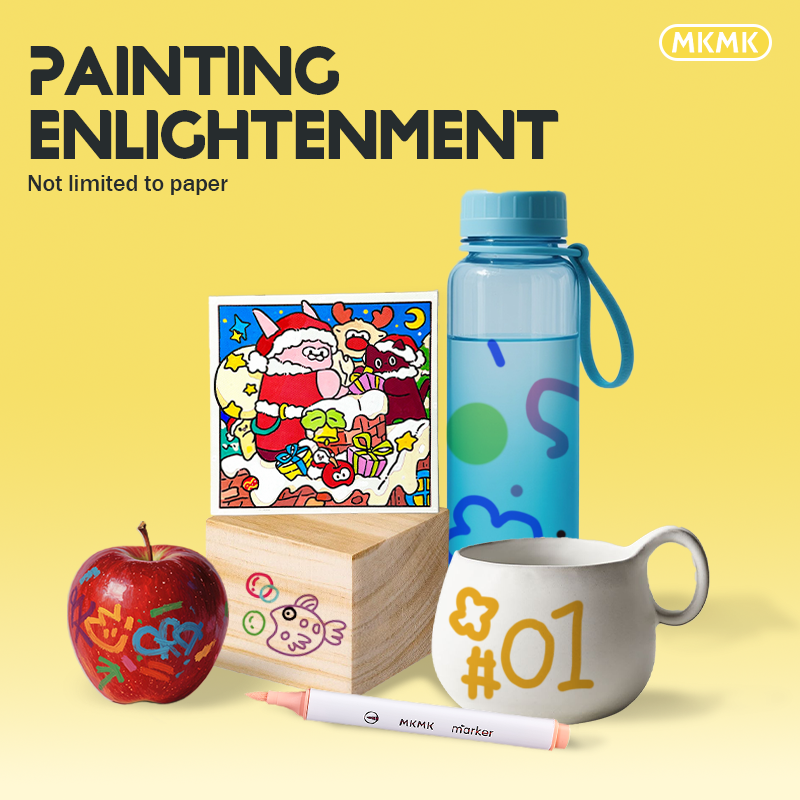
Acrylic markers lay down water-based acrylic paint through a brush or bullet tip. One stroke gives you solid, opaque color — the paint covers whatever is underneath, including pencil lines and earlier paint layers. They dry fast, the color stays bright, and they work on paper, canvas, rocks, wood, glass, and fabric.
If you are new to markers, our Acrylic Markers 101 guide covers the basics, and our blending guide shows how to mix colors while the paint is still wet. For a full comparison of the marker family, see acrylic markers vs alcohol markers.
Head-to-Head Comparison
| Oil-based colored pencils | Acrylic markers | |
|---|---|---|
| Color payoff | Builds gradually; soft and layered | Bold and opaque in one stroke |
| Blending | Excellent — layer and blend with many passes | Good while wet; harder once dry |
| Layering | Many clean layers without clouding | Paint covers previous layers completely |
| Fine detail | Best — sharp point, hairline control | Good with a fine tip, less precise than a pencil |
| Large areas | Slow; best for small to medium work | Fast; one stroke covers a wide area |
| Paper | Smooth or lightly textured paper | Paper, canvas, rocks, wood, glass, fabric |
| Mistakes | Hard to erase; layer over or accept | Paint over with another color |
| Drying time | No drying — ready immediately | Dries in seconds to a minute |
| Best for | Portraits, gradients, detailed illustration | Bold art, signs, crafts, mixed surfaces |
Blending: Pencils Win on Gradients
Blending is where pencils earn their keep. Lay down a light layer of one color, add a second color over it, and blend with a light circular motion — the colors merge into a smooth gradient. You can repeat this many times: light layers, gentle pressure, patience. Skin tones, skies, fur, and fabric folds all benefit from this kind of control.
Markers blend too, but differently and faster. Work while the paint is wet, overlap two colors, and feather the edge with the brush tip. Once the paint dries, the blend is set — you cannot rework it the way you can rework pencil layers.
A useful combination: block in the base colors with markers, let them dry, then shade and blend over the top with pencils. The pencil grips the dry paint well, and you get the speed of markers with the softness of pencils.
Detail Work: Pencils Win on Precision
A sharpened pencil point draws a finer line than any marker tip. Eyelashes, hair strands, leaf veins, small text, and the edge of a shadow all come out cleaner with a pencil. If your project lives or dies on fine detail — a portrait, a botanical drawing, a detailed coloring page — pencils are the right tool.
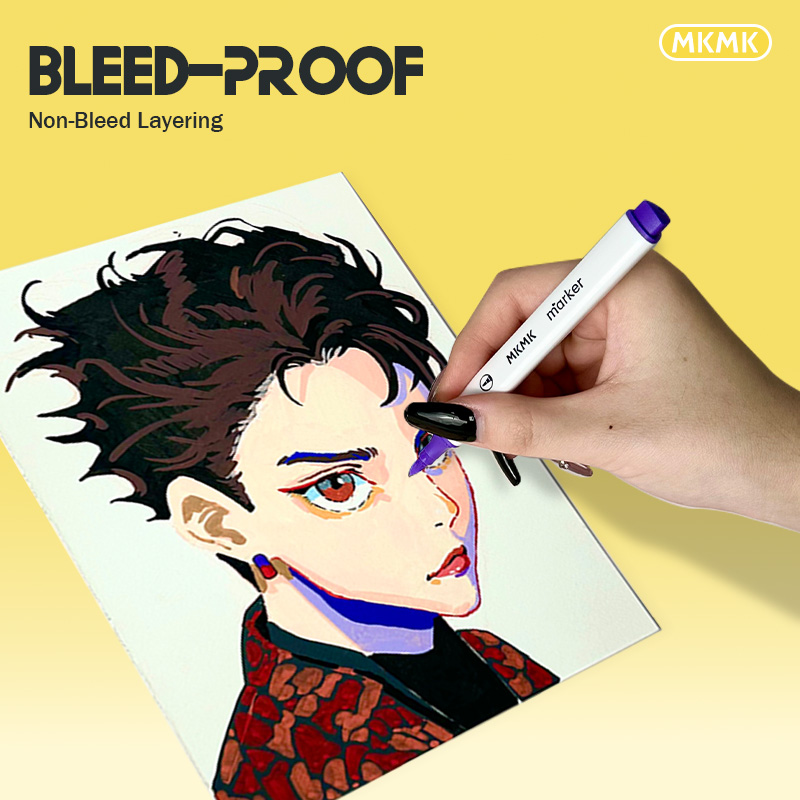
Markers handle detail reasonably well with a fine or brush tip held upright, and they are faster for medium-sized details like the outline of a petal or the edge of a letter. But for the smallest marks, nothing beats a sharp point. Our coloring books and journaling guide covers which tool fits which part of a coloring page.
Paper: What Each Tool Needs
- Colored pencils want smooth or lightly textured paper with enough tooth to grab the pigment. Very smooth paper does not hold enough layers; very rough paper eats the pencil point. Standard drawing paper or a coloring book with medium-weight pages works well.
- Acrylic markers are less fussy about paper, but they want paper thick enough not to buckle when wet. They also work on surfaces pencils cannot touch at all: canvas, wood, rocks, and glass. Our surfaces guide lists what works and what needs a primer.
If you plan to use both tools on one piece, choose paper that suits the pencils — smooth, medium-weight drawing paper — and the markers will behave on it too.
When to Pick Which
Pick oil-based colored pencils when: you want soft gradients and realistic shading; the work is detailed or small; you are drawing portraits, animals, or botanical art; or you want to add fine detail over a painted base.
Pick acrylic markers when: you want bold, flat color fast; you are working on a surface other than paper; you are making signs, rocks, shoes, or gifts; or you want opaque coverage that hides what is underneath.
Use both when: you want speed and softness in the same piece. Markers for the base and the big shapes, pencils for shading, gradients, and the final detail pass. This is how many mixed-media artists work, and it plays to the strength of each tool.
FAQ
Are oil-based colored pencils better than wax-based pencils?
For layering and blending, yes — oil-based cores are firmer, layer more cleanly without going cloudy, and are much less prone to wax bloom. Wax-based pencils are softer and lay down color faster, so they suit quick sketching.
Can you use colored pencils over acrylic markers?
Yes. Let the marker paint dry completely first, then draw over it with pencils. The pencil grips dry acrylic paint well, which makes it a good way to add shading and detail to a marker base. Use light pressure at first — heavy pressure can scratch the paint.
Do oil-based colored pencils work on canvas?
They work on primed canvas and canvas paper, but the texture makes fine detail harder and the pencil wears down faster. Paper is the better surface for pencils; canvas belongs to markers and paint.
How many colors do I need in a colored pencil set?
A 72-color set covers most subjects well, including skin tones and natural greens. A 120-color set adds more shades for subtle gradients and detailed work. If you blend a lot, more colors mean less mixing; if you mostly draw bold subjects, a smaller set is enough.