
Best Acrylic Markers for Beginners: How to Choose Your First Set
Buying your first set of acrylic markers should be fun, not confusing. But walk into any art store or scroll any listing and you will face the same questions: brush tip or bullet tip, 24 colors or 80, cheap set or brand-name set — and does any of it actually matter when you are just starting out?
The right beginner set behaves predictably, covers the colors you will actually use, and does not punish you for learning. This guide explains what to look for, what to skip, and how to pick a first set you will still reach for months later. If you are completely new to the medium, start with our Acrylic Markers 101 guide for the basics.
What Makes a Marker Good for Beginners?
A good beginner marker does three things well: the paint flows evenly with light pressure, the color on the page matches the cap closely enough that you are not guessing, and the tip holds its shape after a few sessions so your lines stay clean.
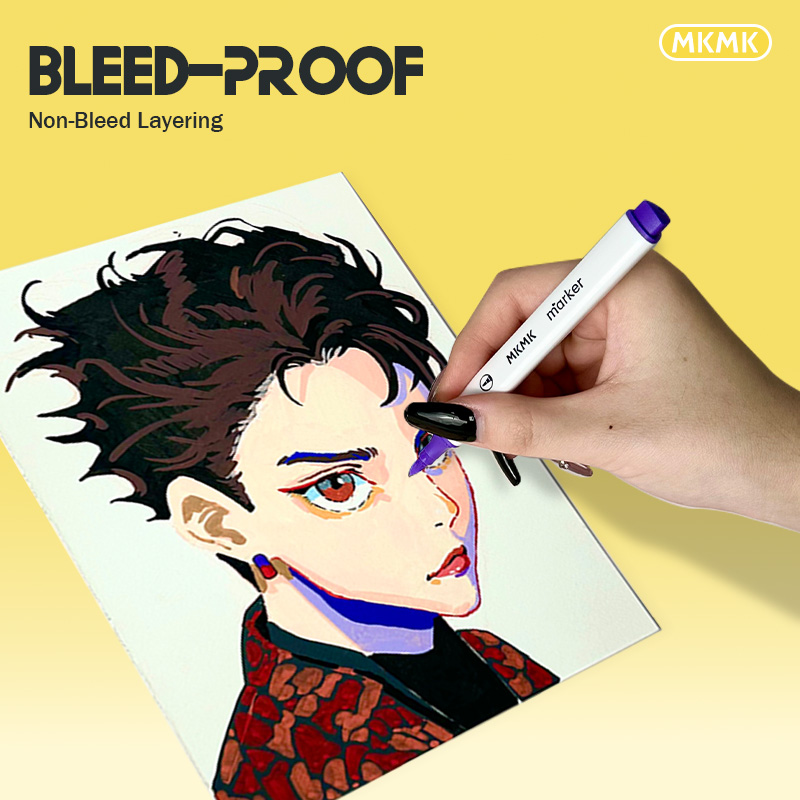
Opacity matters too. Acrylic paint is opaque, so a wrong stroke can be painted over once it dries — that is what makes acrylic markers forgiving. A set with thin, streaky paint takes that safety net away. Test a marker on scrap paper first: one solid stroke should cover the paper underneath.
Brush Tip or Bullet Tip?
Most beginner sets come with one of two tip styles, and the choice shapes what you can draw.
A brush tip bends like a paintbrush. Press lightly for a fine line, press harder for a thick stroke, and you can change width mid-line. It is the better choice for hand lettering, blending, and a painterly feel — but it takes a little practice before your lines go where you want them.
A bullet or chisel tip gives you the same line width every time. It is easier to control, better for coloring inside lines, and good for clean outlines and large flat areas — but you cannot vary a stroke the way you can with a brush.
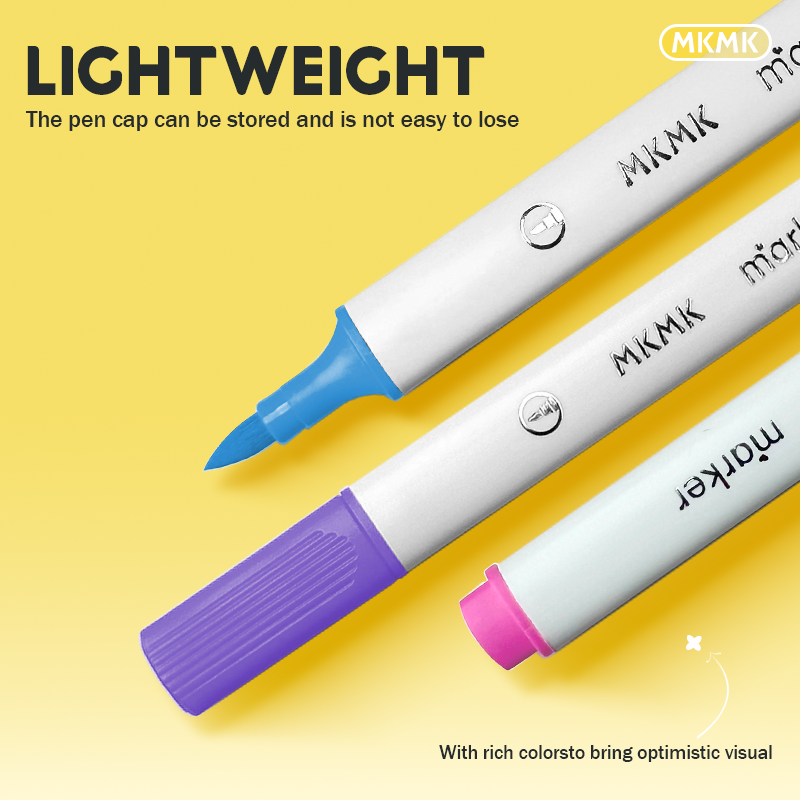
If you can only buy one set, a soft-brush tip is the more versatile starting point — it can do most of what a bullet tip does, plus blending and lettering. MKMK’s soft-brush acrylic markers use a flexible brush tip that bends like a paintbrush, while the direct-liquid markers use a soft brush tip with a liquid ink system. Our soft-brush vs direct-liquid comparison walks through how the two feel in the hand.
How Many Colors Do You Actually Need?
Set size is where beginners most often overspend — or underspend. Here is how the common sizes play out:
- 24 colors cover the basics: one red, one blue, one green, and so on. Fine for simple coloring and crafts, but you will miss the in-between shades — no light green for new leaves, no dark blue for night skies.
- 48 colors are the sweet spot for most beginners. You get light and dark versions of each main color, which is enough to shade, highlight, and blend without buying a second set.
- 60 colors add more mid-tones. Worth it if you already like blending and want finer gradients.
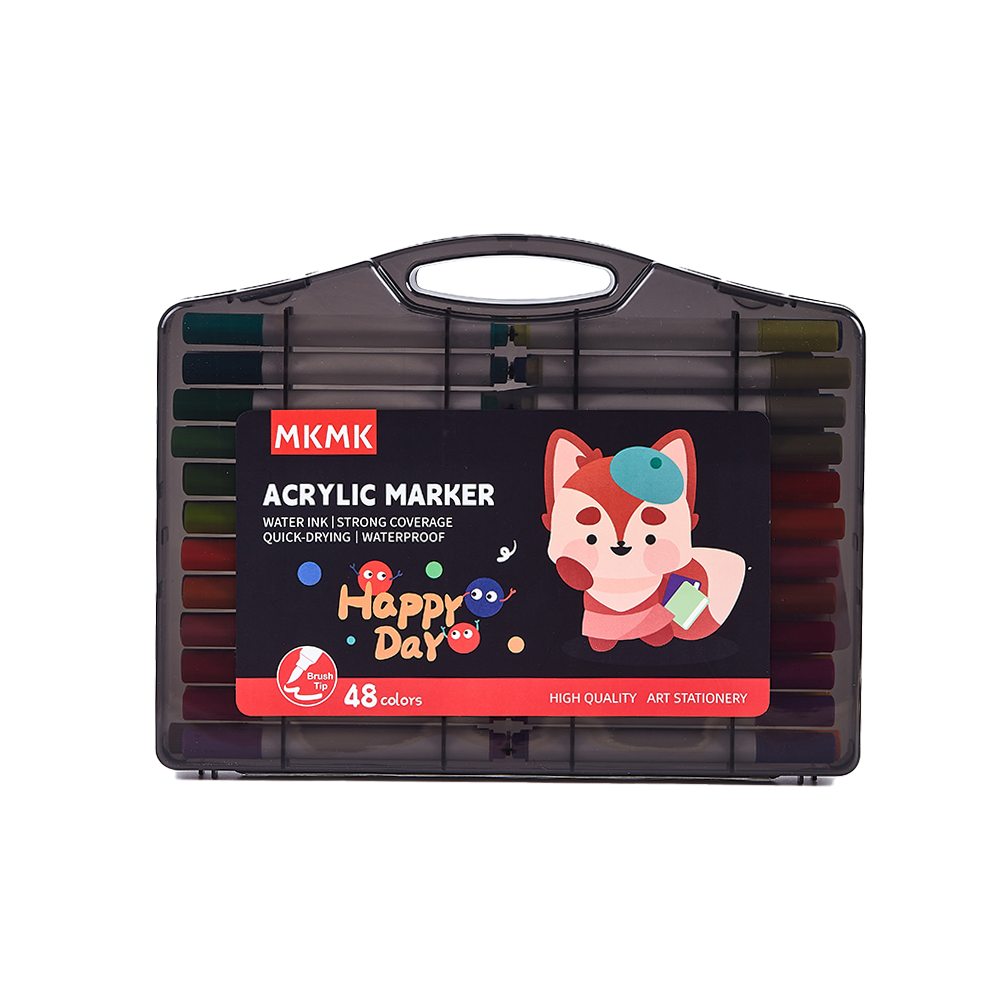
Very large sets can be overwhelming when you are still learning which colors you actually reach for — start in the middle. The MKMK 48-color soft-brush set is listed at $16.99 on mkmkpen.com, and the 60-color soft-brush set at $20.99 — check the product page for current pricing and availability before you order. If you prefer a liquid ink system, the direct-liquid 24-color set is listed at $16.99 and the direct-liquid 48-color set at $31.99. Our 24 vs 48 vs 80 colors guide compares set sizes in more detail.
What to Check Before You Buy
Four quick checks will save you from the most common beginner regrets: confirm the tip type in the listing, since “brush tip” and “bullet tip” behave very differently; check which surfaces the set is made for — our surfaces guide covers each one; look at the color chart, not just the count, because two 48-color sets can have very different ranges; and confirm stock on the product page, since set sizes sell out and listings can stay up after the size you want is gone.
Your First Week With a New Set
You do not need a course to get started. Spend a few practice sessions on scrap paper: swatch every color and label it, practice flat color with slow overlapping strokes, try layering a second color once the first is dry, and try blending while the paint is still slightly wet. Then make something small — a bookmark, a greeting card, a painted rock. Finishing a small piece teaches you more than ten practice sheets, and after a week you will know whether you want more colors, a different tip, or a second set — choosing from experience instead of guessing.
Mistakes Beginners Make (and How to Avoid Them)
Pressing too hard. Hard pressure wears out the tip and floods the paper. Use light, even pressure and let the tip do the work.
Skipping the swatch. Colors look different on paper than through the cap. Test on scrap first, especially before using a color on a finished piece.
Starting on thin paper. Printer paper buckles and tears when it gets wet with paint. Use mixed-media paper or cardstock, around 200 gsm or heavier, for anything you care about.
Leaving caps off. The tips dry out fast. Put the cap back on as soon as you switch colors, and store markers horizontally so the ink stays at the tip.
For the full shortlist, see our best acrylic markers guide.
FAQ
What is the best acrylic marker set for a complete beginner?
A mid-size soft-brush set — 48 colors is the usual sweet spot, covering the full color wheel with light and dark versions of each main color.
Are expensive acrylic markers worth it for beginners?
Not necessarily. Even paint flow, decent opacity, and a tip that holds its shape matter more than the brand name. Start in the middle and upgrade when you know what you need.
Do beginners need both soft-brush and direct-liquid markers?
No. Pick one to start — soft-brush is the more flexible first choice for lettering and blending. Add the other later if a project calls for it.
How long do acrylic markers last?
It depends on use and storage. Keep the caps on, store them horizontally in a cool place out of direct sun, and a set should last through many projects.