

Acrylic Markers on Canvas: How to Paint, Layer and Finish
Canvas is where acrylic markers surprise people. The same pens you use in a sketchbook can fill a stretched canvas with flat, opaque color — no brushes to wash, no palette to mix. But canvas behaves differently from paper, and a few habits make the difference between a finished-looking piece and a sketch that got too big.
Why Canvas Works So Well With Acrylic Markers
Canvas is made for acrylic paint, and acrylic markers are filled with acrylic paint. The woven surface grips the paint, the primer (gesso) keeps it from soaking straight through, and the opaque paint sits on top of the weave instead of disappearing into it. Light colors cover dark ones, white highlights pop, and mistakes can be painted over once they dry.
Compared with paper, canvas does not buckle when it gets wet, and it is rigid enough to take repeated layers. Compared with a brush and tube paint, markers give you control: clean lines, filled shapes, and fine detail with the same tool, without switching instruments or cleaning anything between colors. For a full overview of what else markers can handle, see our surfaces guide. If you are new to the medium, start with Acrylic Markers 101.
Choosing the Right Canvas
Most store-bought canvas is already primed with gesso and ready to use — that is what you want for markers.
- Canvas boards are flat, stiff, and cheap, best for practice and small framed pieces.
- Stretched canvas is fabric over a wooden frame, best for display pieces that hang without a frame.
- Canvas pads are primed canvas sheets bound like a sketchbook, best for practice and testing ideas.
Avoid raw, unprimed canvas unless you know what you are doing — unprimed fabric drinks paint and dulls colors. If you buy raw canvas, prime it with two coats of gesso and let it dry fully first.
Size matters too. Small canvases (8×10 inches and under) are forgiving: a 48-color set covers them easily and mistakes are cheap. Large canvases need more paint and patience — filling a big flat area with a pen takes time. Start small, then scale up.
Prepping the Canvas
A pre-primed canvas needs very little prep, but two small steps help. First, sketch lightly in pencil — heavy lines can show through light paint, and hard erasing can damage the primer. Second, test your colors on the edge or back of the canvas, or on a scrap of the same canvas. Colors look different on the woven surface than on paper or through the cap, and a swatch saves you from discovering that on the finished piece.
If the canvas feels very rough, one extra thin coat of gesso, sanded lightly when dry, gives a smoother surface for fine detail. This is optional — most people paint straight onto the primed canvas and are happy with the result.
Painting Techniques That Work on Canvas
- Flat color. Fill an area with slow, overlapping strokes in one direction. The weave can leave tiny white gaps if you rush — go over the area twice, letting the first pass dry for a minute, then fill in any gaps.
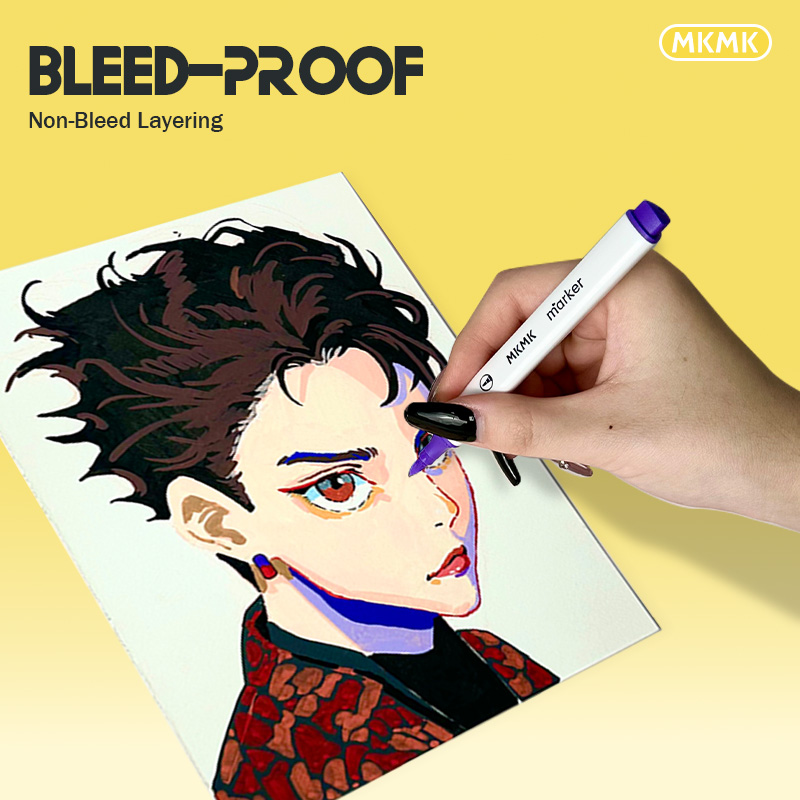
- Layering. This is where acrylic markers shine on canvas. Let a layer dry, then paint over it. Because the paint is opaque, the new color sits cleanly on top — shadows, highlights, corrections, all of it. You can build a painting in three or four layers without the colors turning muddy.
- Blending. Work while the paint is still slightly wet: lay down one color, add the second beside it, and work the boundary with the brush tip. Soft-brush tips are best for this, because the tip bends and spreads the paint like a brush. MKMK’s soft-brush markers are the more flexible choice for blending; the direct-liquid markers give very even, bold flat color. Our comparison guide explains the difference.
- Line work and detail. Use the tip of the brush for fine lines, and let each detail layer dry before adding the next. For very fine detail, a light touch and a slow hand beat pressing hard.
- Mixed media. Markers combine well with pencil sketching underneath and acrylic paint for large background areas — just let each medium dry before adding the next.
Picking Colors for Canvas
A 48-color set is enough for most canvas work — it covers the full color wheel with light and dark versions of each main color. The MKMK 48-color soft-brush set is listed at $16.99 on mkmkpen.com; the 60-color soft-brush set is listed at $20.99 and adds more mid-tones for smoother gradients. If you prefer a liquid ink system, the direct-liquid 48-color set is listed at $31.99. Check the product page for current pricing and availability. Our set-size guide compares 24, 48, and 80 colors in more detail.
One tip: buy a white marker or a set with two whites. White is your correction tool, your highlight tool, and your mixing tool on canvas.

Common Mistakes on Canvas
- Rushing the first layer. Racing across the weave leaves white dots. Slow down on the first pass; speed up once the surface is covered.
- Painting on unprimed canvas. Raw fabric absorbs paint unevenly. Use pre-primed canvas or prime it yourself with gesso.
- Pressing hard for detail. Hard pressure frays the brush tip and floods the weave. Light pressure and a slow hand give cleaner lines.
- Skipping the dry time between layers. Wet paint over wet paint goes muddy. Wait a minute before painting over a layer — acrylic marker paint dries fast.
- Forgetting the edges. On a stretched canvas, paint the sides too, or the piece looks unfinished when it hangs.
FAQ
Do acrylic markers work on canvas?
Yes. They work well on pre-primed canvas and canvas boards — the paint sits on the surface, dries flat and opaque, and layers cleanly. Let each layer dry before adding the next.
Do you need to prime canvas for acrylic markers?
Store-bought canvas is usually already primed with gesso and ready to use. Only raw, unprimed canvas needs priming — two coats of gesso, dried fully, before you start.
Can you blend acrylic markers on canvas?
Yes, while the paint is still slightly wet. Lay down one color, add the second beside it, and work the edge with a soft-brush tip. Once dry, a new color will cover rather than blend.
Should you seal acrylic marker art on canvas?
It is not required, but a clear acrylic varnish protects the surface and evens out the finish. Wait at least 24 hours, then apply one or two thin coats. Keep the finished piece out of direct sunlight.