MKMK vs Grabie Acrylic Markers: Soft Brush Sets Compared
Grabie and MKMK are the two brands most often compared by people who paint with a soft brush tip: both sell water-based acrylic markers with flexible brush tips, both target rock painters and crafters, and both offer large color counts. The difference is how the colors are packed. Grabie’s best-known set is 36 dual-tone pens that give you 72 colors — two shades per pen. MKMK’s sets are one color per pen, from 24 up to 80 colors. This comparison uses only public specifications — tip types, color counts, and surfaces — so you can see which packing suits the way you paint.
Disclosure: MKMK is the author’s brand. Grabie specifications below come from public retail listings.
At a Glance
| MKMK | Grabie | |
|---|---|---|
| Ink | Water-based acrylic, opaque | Water-based acrylic, opaque |
| Tip setup | One soft brush tip per pen (soft-brush and direct-liquid lines) | Dual tip per pen: soft brush tip (1–5 mm) + fine tip (0.7–2 mm) |
| Color counts | Soft-brush and direct-liquid sets from 24 to 80 colors, one color per pen | 36 pens with two colors each = 72 colors; 60-pen set = 120 colors |
| Packing | Each pen is one color; the set size is the color count | Each pen carries two colors, so the color count is double the pen count |
| Ready to use | Ready out of the cap; no shaking or pressing | Ready to use; water-based ink, quick-drying |
| Surfaces | Paper, canvas, rocks, wood, glass, fabric | Paper, rock, wood, canvas, glass, fabric, stone, ceramics |
| Extras | US warehouse stock | Black-and-white swatch sheet included for color planning |
| Positioning | Budget-to-mid-range sets, US warehouse stock | Mid-range sets, dual-tone brush-tip specialist |
Tip Types: One Brush vs Brush Plus Fine
Both brands are built around the soft brush tip, and the tips are similar in range: Grabie’s brush tip runs 1–5 mm depending on pressure, and MKMK’s soft brush tip changes width the same way — thin lines upright, broad strokes on its side. A brush tip paints strokes, fills, and lettering, and it is the tip that makes both brands good for painting rather than just coloring.
The difference is the second tip. Every Grabie pen is dual-tip: a soft brush tip on one end and a fine tip (0.7–2 mm) on the other, for outlines, details, and writing. One Grabie pen does both jobs. MKMK’s acrylic markers are single-tip brush pens — to get a fine line with MKMK, you hold the brush tip upright and use the point, or you reach for a different tool: MKMK’s dual-tip watercolor outlining pen, which pairs a brush tip with a fine tip for lettering and outlines. See our outlining pens guide.
If you switch between filling and outlining constantly — rock painting, doodling, journaling — a dual-tip pen means fewer pen swaps. If you mostly paint with a brush tip and want the widest color range, a single-tip set with more colors may matter more.
Color Counts: 72 in 36 Pens vs 80 in 80 Pens
Grabie’s headline set is 36 pens that deliver 72 colors: each pen carries two shades, one on each end, so the set is half the size of its color count. Grabie also sells a 60-pen set that delivers 120 colors the same way. A black-and-white swatch sheet is included, so you can plan colors on light and dark paper before you paint.
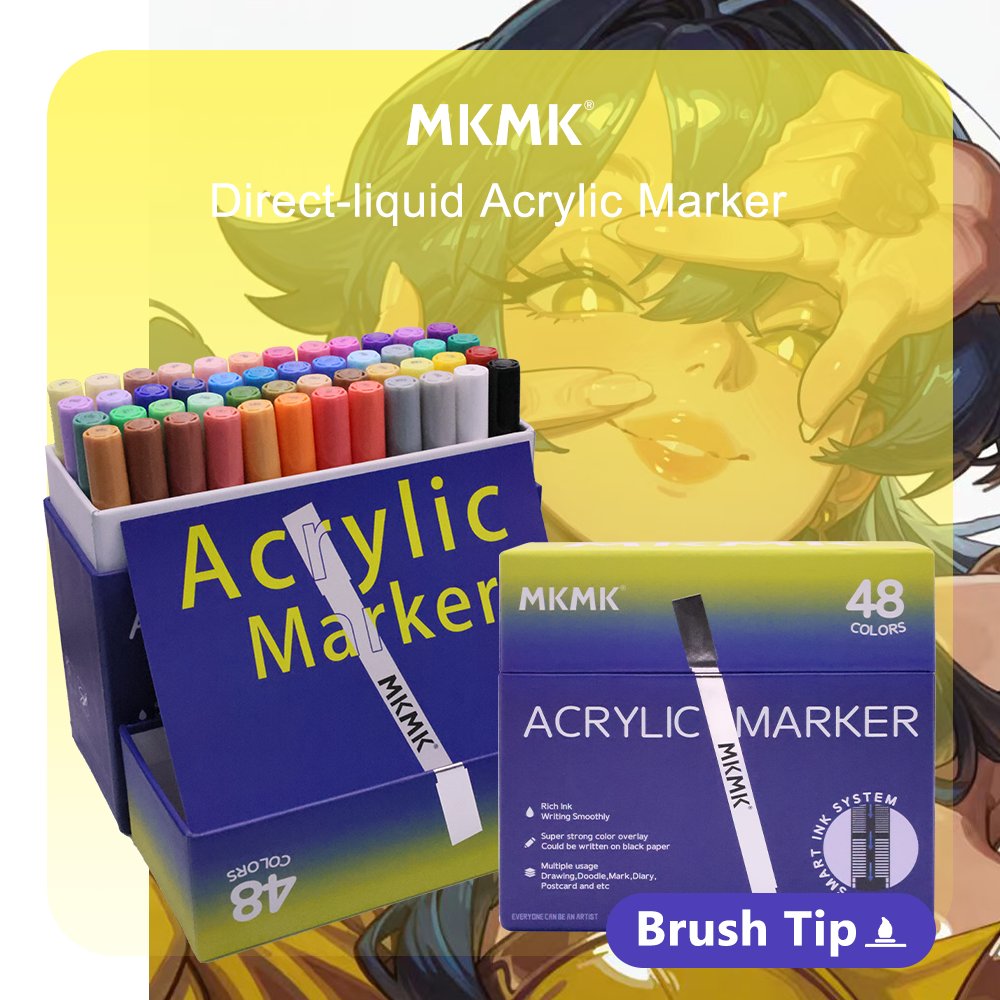
MKMK’s sets are one color per pen: the soft-brush and direct-liquid lines run from 24 to 80 colors, and the 48-color soft-brush set is the most popular starting point — a full basic palette plus skin tones, natural greens, and grays — listed at $16.99 on the product page (check the page for current pricing and availability). Larger sets add more intermediate tones for blending and portraits.
The packing changes how the set feels in use. Grabie’s dual-tone design means fewer pens to carry and store for the same number of colors — 36 pens for 72 shades fits in a smaller case. It also means the two colors on one pen are often a light and dark pair of the same hue, which suits shading and highlighting. MKMK’s one-color-per-pen design means each pen is a single shade, so the set is bigger for the same color count — but every pen is a full-size brush pen, and you never have to remember which end of a pen holds which color.
Neither count is “better” on its own. Seventy-two colors covers most craft projects and is easier to carry; 80 colors matters when you blend a lot — skies, skin tones, and natural greens are where the extra shades show up.
Ink and Drying: Same Family, Same Care
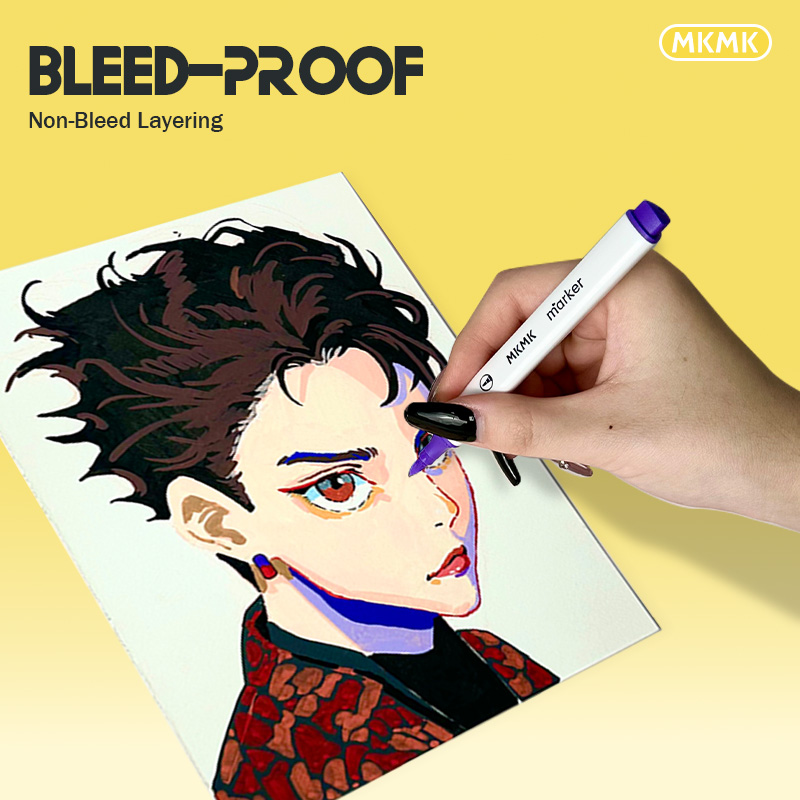
Both brands use water-based acrylic ink — opaque, fast-drying, and water-resistant once dry. Both are ready out of the cap, with no shaking or pressing. Both need sealing for outdoor or heavily handled work. Our sealing guide covers how, and our blending guide shows how to blend while the paint is wet.
One practical note from Grabie users: lighter shades can look sheer on the first pass and build up with a second layer — a normal trait of light acrylic colors, not a defect. The same is true of light shades in any brand, including MKMK: two thin layers beat one thick one. Our storage guide explains why caps on and horizontal storage matter for every marker type.
Surfaces and Best Uses
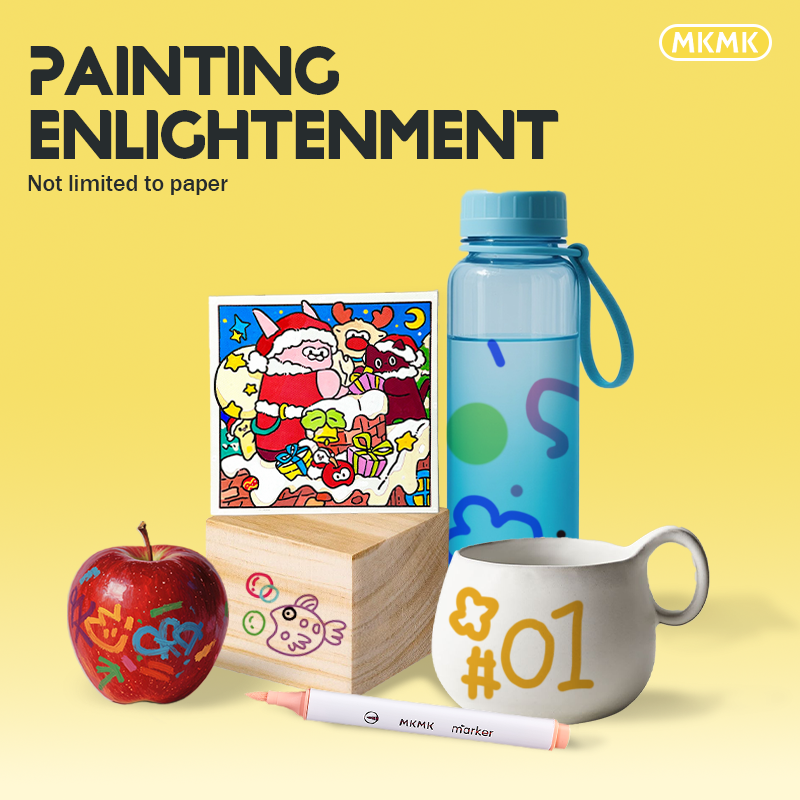
Both brands cover the same ground: paper, canvas, rocks, wood, glass, fabric, stone, and ceramics. Both suit rock painting, signs, mugs, coloring books, and crafts. Grabie’s dual-tone pairing suits shading work — each pen’s two shades are made to work together as a light and dark pair. MKMK’s larger single-color counts suit blending across many shades — see our rock painting guide and our best acrylic markers guide for how to choose a set by project.
For travel and storage, Grabie’s 36-pen case is the more compact kit for its color count. For a home studio where the set lives on a shelf, the difference matters less, and the wider MKMK counts are the relevant number.
Which Set Fits You?
Pick Grabie if: you want 72 colors in a compact 36-pen case; you like the dual-tone idea — two shades per pen for shading and highlighting; or you want a fine tip built into every pen.
Pick MKMK if: you want one color per pen in sets up to 80 colors; you paint large pieces or long sessions where steady ink flow helps — our direct-liquid line feeds ink straight to the tip — or you want US warehouse stock with fast shipping. Our MKMK range guide walks through every MKMK set, and our soft-brush vs direct-liquid comparison explains MKMK’s two lines.
Either works if: you are painting rocks, signs, or crafts with a soft brush tip — both do that well. Check the product page for current pricing and stock before ordering, and check which set sizes are actually available: availability varies by size for both brands.
FAQ
How does Grabie fit 72 colors into 36 markers?
Each Grabie pen is dual-tone: it carries two colors, one on each end, so 36 pens deliver 72 shades. MKMK’s pens are one color each, so a 72-color MKMK palette would be 72 pens.
What is the difference between a dual-tone pen and a dual-tip pen?
A dual-tone pen carries two colors (one per end). A dual-tip pen carries two tip shapes (for example, brush and fine) — often in the same color. Grabie’s pens are both: two colors and two tip shapes, brush on one end and fine on the other.
Do Grabie markers work on rocks and glass?
Yes — Grabie lists paper, rock, wood, canvas, glass, fabric, stone, and ceramics among its surfaces. Like all acrylic markers, finished pieces should be sealed if they will be handled a lot or kept outdoors.
Which set is better for blending?
Both blend while wet. Grabie’s dual-tone pairs suit shading within one hue; MKMK’s larger single-color counts suit blending across many shades — skies, skin, and natural greens are where the extra colors show up.