
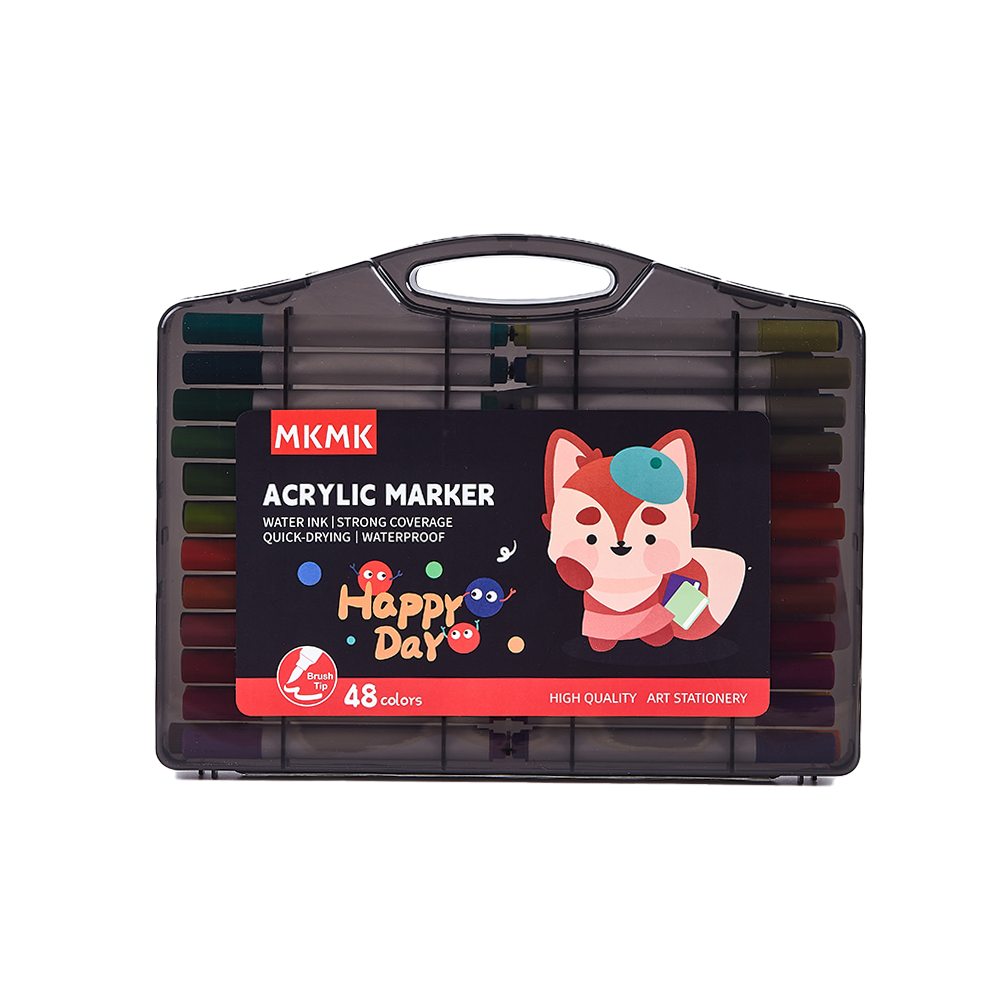
Soft-Brush vs Direct-Liquid Acrylic Markers: Which One Fits Your Art?
MKMK sells two kinds of acrylic markers: soft-brush and direct-liquid. They look similar on a shelf and both lay down opaque acrylic paint, but they feel different in your hand and suit different kinds of art. Picking the wrong one will not ruin your work — but picking the right one will make the work easier and more fun.
Here is a straight comparison, so you can choose with confidence.
The Short Answer
If you like hand lettering, blending, and painterly strokes that change width, start with the soft-brush set. If you mostly want bold, even color for coloring, crafts, signs, and filling large areas, start with the direct-liquid set. If you already know you will do both, having one of each is a practical setup — they complement each other rather than compete.
Soft-Brush Acrylic Markers at a Glance
The soft-brush acrylic markers have a flexible brush tip that bends under pressure, much like a small paintbrush. Press lightly and you get a thin line; press harder and the stroke gets wide. That single tip can do outlines, fills, and calligraphy-style lettering without switching pens.
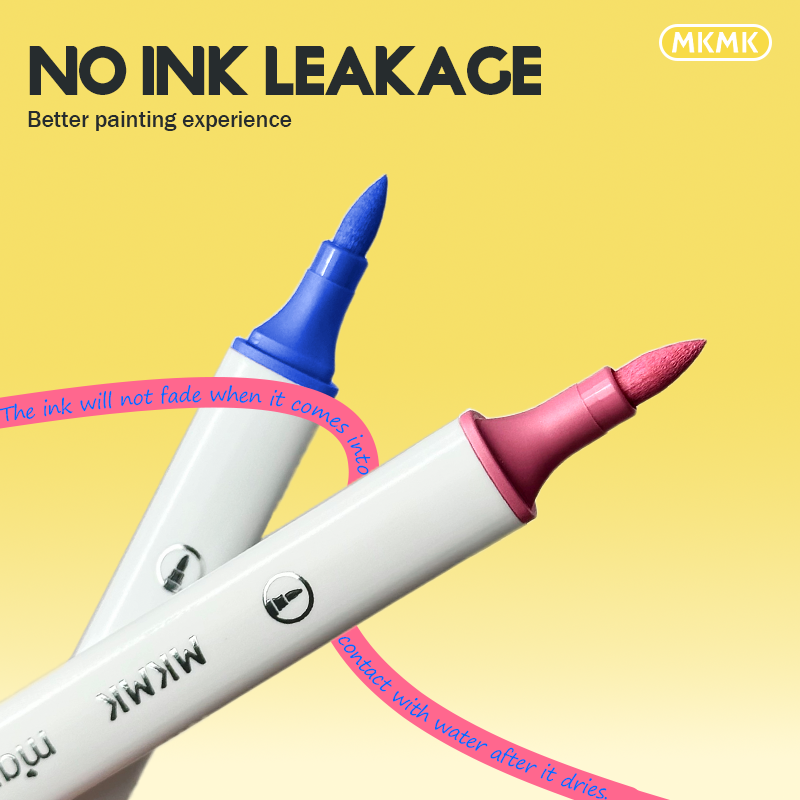
Soft-brush sets come in a wide range of sizes, from 12 colors up to 80. The brush tip is the main reason artists choose them: it makes blending natural. You can lay down one color, add a second color while the first is still slightly wet, and work the edge with the tip until the two colors melt into each other. It is also the better choice for hand lettering, because the tip responds to pressure the way a real brush does — thin on the upstroke, thick on the downstroke.
The trade-off is control. A brush tip takes a little practice. Your first strokes may be wobbly, and very small details are harder than with a firm tip. If you mostly color inside small, precise spaces, the brush tip can feel loose.
Direct-Liquid Acrylic Markers at a Glance
The direct-liquid acrylic markers use a liquid ink system that flows smoothly and evenly onto the page. The color comes out bold and consistent, with less effort: you do not need to press hard or go over the same spot twice to get full coverage.
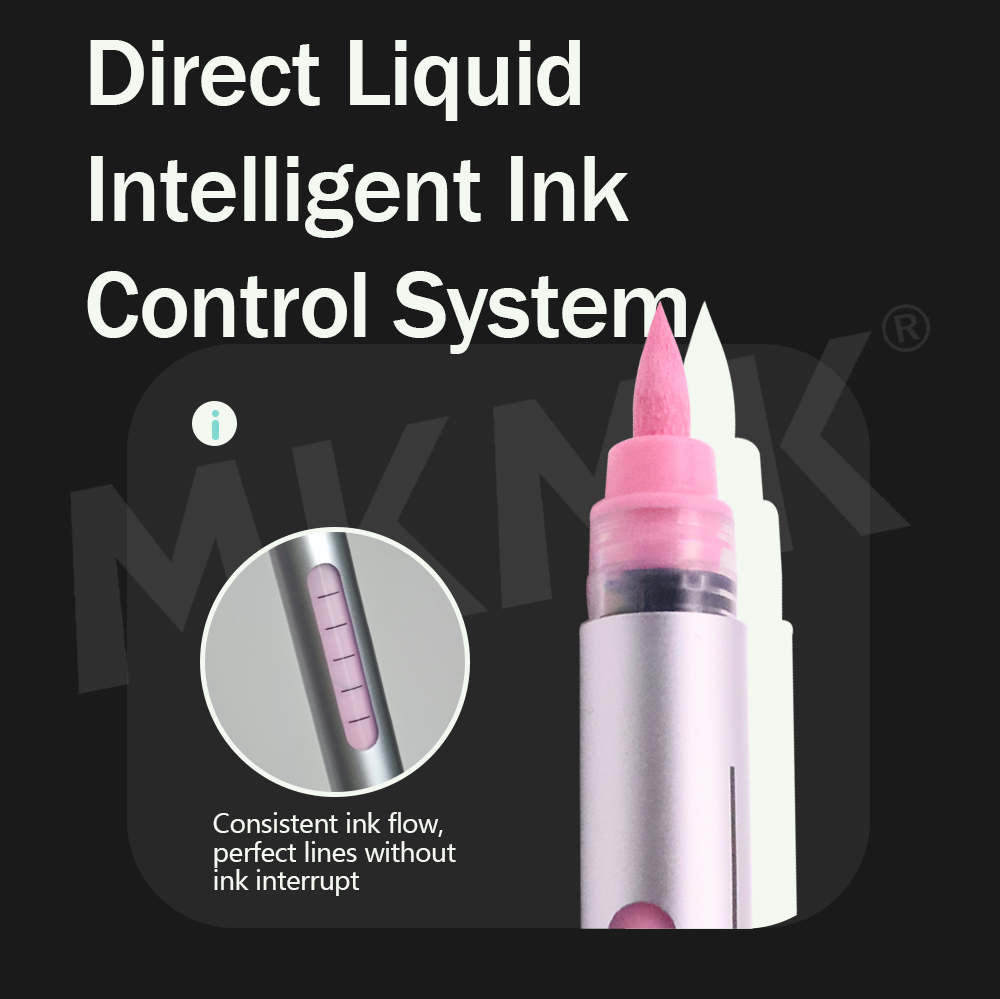
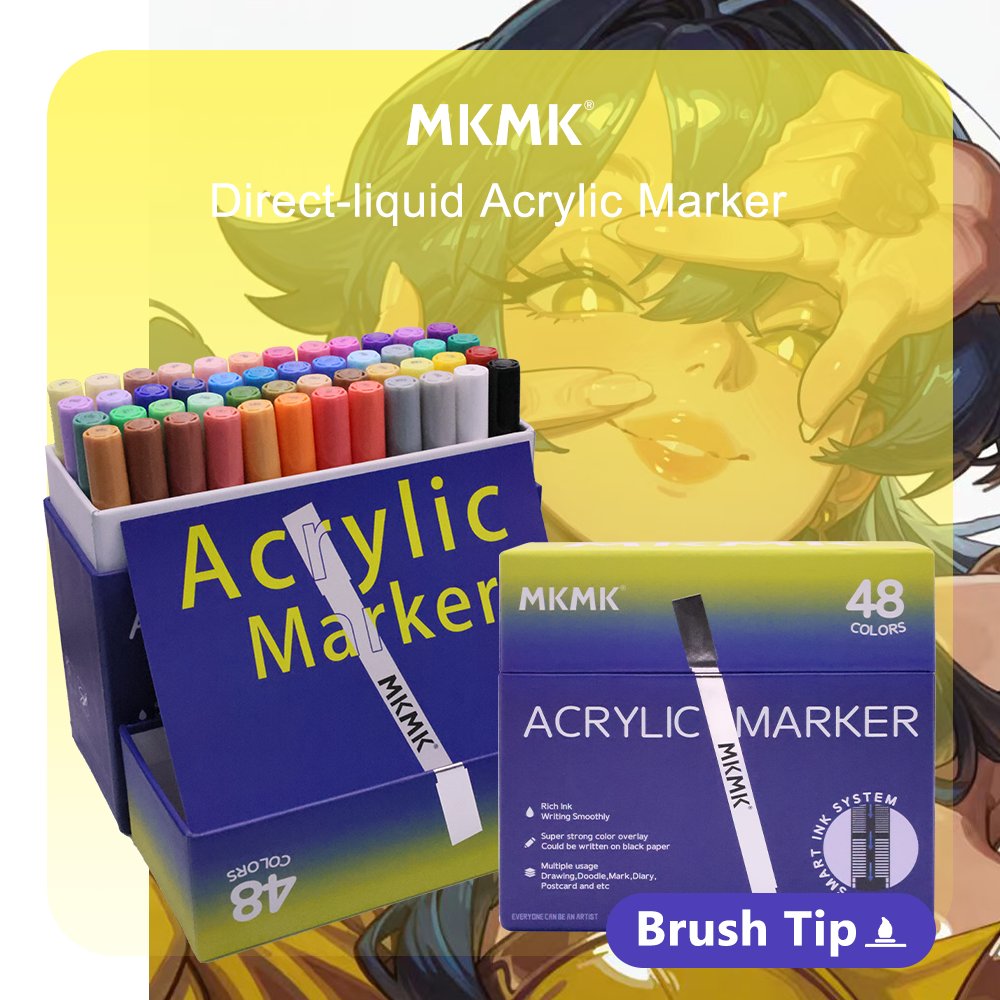
Direct-liquid sets are available from 24 to 80 colors. They are a strong choice for coloring books, rock painting, signs, posters, and any project where you want flat, even color over a large area. The steady flow also makes them forgiving for beginners — the pen does more of the work, and the results look clean on the first try.
The trade-off is flexibility. A direct-liquid marker is less suited to the pressure-based strokes of hand lettering, and blending two colors together is harder because the ink lays down in an even layer rather than a soft, brushy wash. You can still layer one dry color over another — the paint is opaque — but wet blending is not its strength.
Side-by-Side Comparison
| Soft-Brush | Direct-Liquid | |
|---|---|---|
| Tip | Flexible brush tip | Smooth-flowing liquid ink tip |
| Best for | Lettering, blending, painterly strokes | Bold flat color, coloring, signs, crafts |
| Line control | Varies with pressure; takes practice | Steady and even; easy from the start |
| Blending | Excellent while paint is wet | Harder; better for layering dry color |
| Set sizes | 12–80 colors | 24–80 colors |
| Good first pick if you… | Love lettering and gradients | Want clean, even color fast |
Which One for Hand Lettering?
Soft-brush, without question. Lettering depends on thick and thin strokes, and only a brush tip gives you that range in a single pen. Practice on scrap paper first: light pressure on upstrokes, more pressure on downstrokes, and keep your wrist loose. A 48-color soft-brush set gives you enough shades to letter in full color without buying a second set.
Which One for Coloring Books and Crafts?
Direct-liquid. Coloring books, wooden signs, rocks, and posters all reward steady, even coverage, and the liquid ink flow delivers that with less effort. You will finish large areas faster and with fewer streaks. If you paint rocks or wood, the opaque paint covers the surface well — see our guide to surfaces you can use acrylic markers on for prep tips before you start.
Which One for Mixed Media and Journaling?
This is where owning both pays off. Use the direct-liquid markers for base color and big shapes, then switch to the soft-brush markers for lettering, shading, and blended backgrounds. Many artists also keep a set of oil-based color pencils nearby for fine details and soft shading that markers cannot do. The three tools cover almost everything a journal page or mixed-media piece needs.
Can You Use Both Together?
Yes, and they work well together. The paint is acrylic in both cases, so a dry layer of one can be painted over with the other. A common workflow is to block in flat color with the direct-liquid markers, let it dry for a minute, then add lettering, shadows, and blended edges with the soft-brush markers. Just remember the basic rule: blend while wet, layer when dry.
How to Decide
Ask yourself one question: what will you draw most?
- Mostly lettering, blending, and expressive strokes → soft-brush.
- Mostly coloring, crafts, signs, and flat color → direct-liquid.
- A bit of everything, or you are not sure yet → start with a 48-color soft-brush set for flexibility, and add a direct-liquid set later if you find yourself wanting faster, flatter coverage.
Either way, buy a set size you will actually use. A 48-color set suits most people; a 24-color set is fine if you are testing the waters, and an 80-color set is for artists who want every shade on hand. Check the product page for current availability before ordering — set sizes can sell out.
FAQ
Can beginners use soft-brush markers?
Yes, but expect a short learning curve. The brush tip responds to pressure, so your first strokes may be uneven. Practice on scrap paper for a few minutes and it starts to feel natural. If you want zero learning curve, start with direct-liquid markers.
Do direct-liquid markers bleed through paper?
They can on thin paper, like any paint-based marker. Use mixed-media paper or cardstock (around 200 gsm or heavier) for finished pieces, and put a scrap sheet underneath your work.
Which type lasts longer?
That depends on how much you paint, not on the type. Both use acrylic paint, and both dry out if you leave the caps off. Keep caps on, store them horizontally in a cool place, and either type should serve you well.
Should I buy both types?
If you do more than one kind of art, yes. They do different jobs well: direct-liquid for fast, even color; soft-brush for lettering and blending. Many artists keep one set of each and reach for whichever fits the page in front of them.